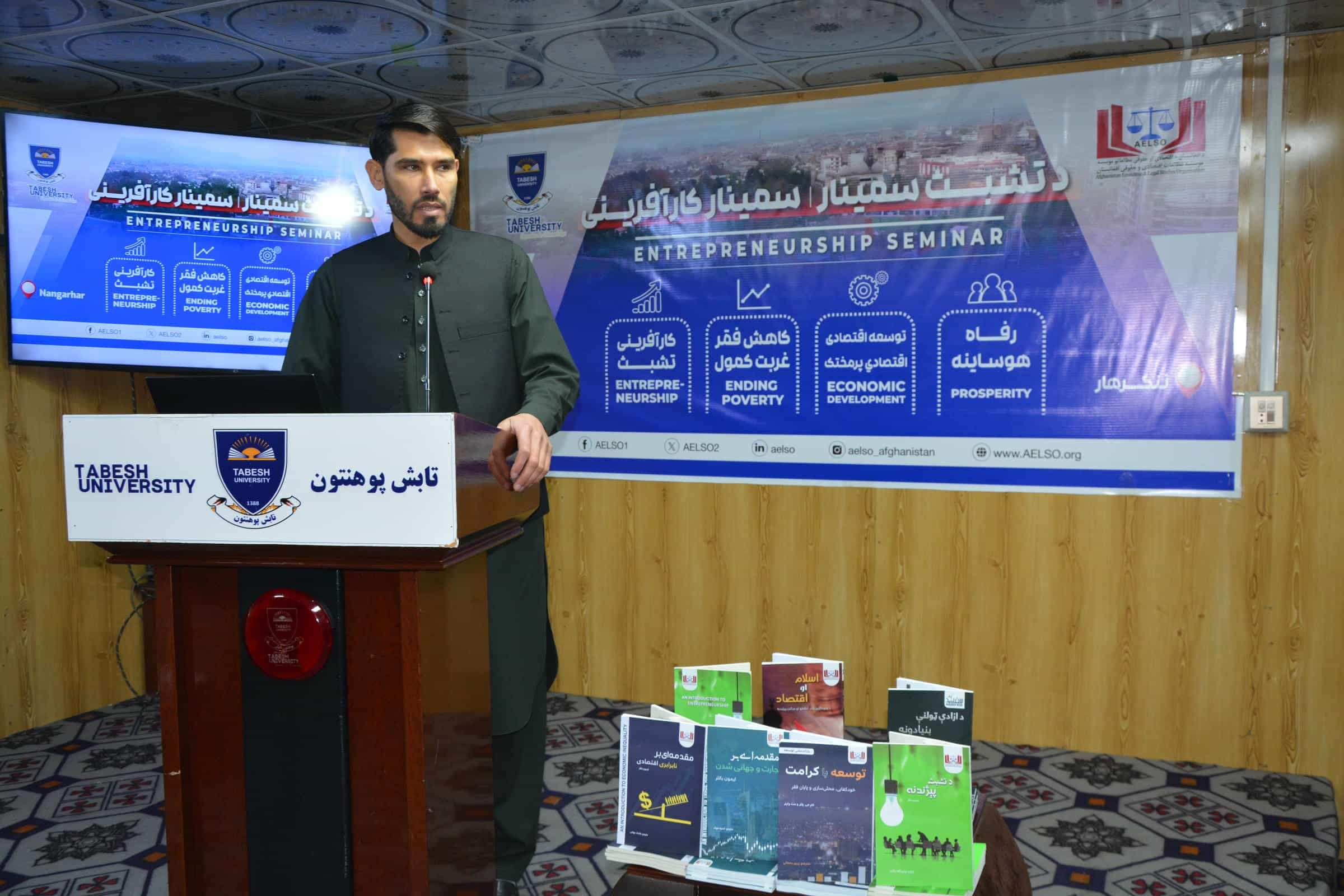
Entrepreneurship as an Effective Strategy for Sustainable Development and Job Creation in Nangarhar
An entrepreneurship seminar was held on December 28, 2025, in Nangarhar Province, organized by the Afghanistan Economic and Legal Studies Organization (AELSO) in cooperation with Tabish University. The event brought together university professors, economic experts, members of AELSO, young entrepreneurs, and students from various universities to examine opportunities and challenges related to entrepreneurship in Nangarhar and to propose solutions for sustainable economic growth in Afghanistan. The seminar particularly emphasized how to harness Nangarhar’s strong economic potential as a high-capacity province.
The main objective of the seminar was to strengthen cooperation between academic institutions, economic organizations, and young entrepreneurs in order to promote entrepreneurship, economic development, and poverty reduction in Afghanistan. Through organizing this event, AELSO aimed to highlight the role of universities as key centers for training entrepreneurial human capital, especially in provinces such as Nangarhar. The seminar also sought to introduce new opportunities in entrepreneurship and present sustainable business models for Afghanistan.
During the event, speakers and experts discussed the importance of entrepreneurship in sustainable development and the effective use of domestic resources to improve economic conditions and generate employment. Key topics covered in the seminar included:
- The Role of Universities in Training Entrepreneurs:
Many speakers emphasized the need for reforms in the education system and strengthening university capacities to cultivate future entrepreneurs. Universities can support youth by offering specialized entrepreneurship courses, technical and vocational training, and platforms for idea generation and startup development. - Challenges and Opportunities for Entrepreneurship in Afghanistan:
Economic experts highlighted challenges such as limited financial resources, inadequate infrastructure, and the lack of a supportive environment for small and medium-sized enterprises. However, they also stressed Afghanistan’s significant opportunities, including rich natural resources, a motivated young population, and Nangarhar’s strategic geographic location for investment. - Sustainable Business Models:
This segment focused on market analysis, designing viable business models, and developing long-term strategies to ensure business sustainability. Trainers emphasized the importance of leveraging modern approaches such as digital businesses and online services to expand entrepreneurship.
The seminar provided a valuable platform for exchanging experiences among young entrepreneurs, students, and other participants. During discussion sessions, many attendees underscored the importance of strengthening agricultural production and reducing dependence on imports. Some participants also highlighted specific investment opportunities in Nangarhar.
Faridullah Salar, one of the young participants in the seminar, stated: “I am grateful for the valuable initiative of AELSO. Regarding entrepreneurship opportunities, it can be said that given Nangarhar’s climatic conditions, there are extensive year-round opportunities for entrepreneurship in the agricultural sector. If we place greater emphasis on modernizing this sector, we can meet many domestic market demands while also contributing to sustainable development.”
The seminar demonstrated that building strong partnerships among universities, economic institutions, and youth can serve as a key driver of economic growth and poverty reduction in Afghanistan. Other significant outcomes included the identification of new opportunities across various economic sectors. In conclusion, based on participants’ recommendations, greater emphasis on practical entrepreneurship training, adequate financial support for startups, and the development of suitable infrastructure to facilitate the growth of small businesses were highlighted as essential priorities.