Kabul Hosts Academic Debate on the Economic Impacts of Middle East Conflicts
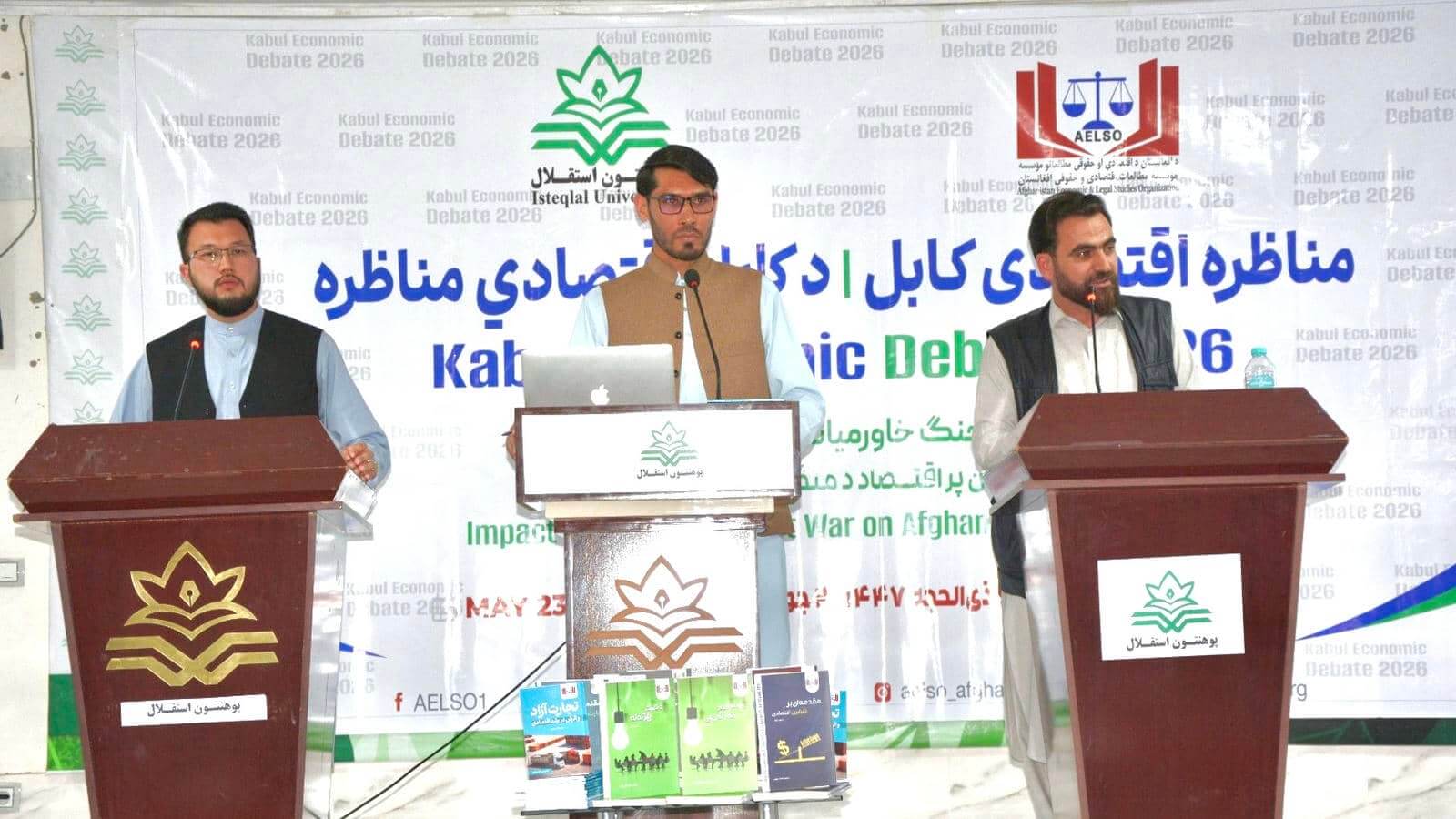
An academic and policy-oriented debate on the economic consequences of Middle East conflicts for Afghanistan was held in Kabul, bringing together university professors, experts, and students. The event, titled the “Kabul Economic Debate,” was jointly organized by the Afghanistan Economic and Legal Studies Organization (AELSO) and Isteqlal University, with the aim of examining the challenges and opportunities arising from regional developments. The program created a dynamic platform for scholarly discussion and exchange of ideas among participants.
At the outset, speakers emphasized the vital role of academic institutions and universities in reducing conflict, fostering economic growth, and promoting social stability. They noted that through targeted research, public awareness, and the training of skilled human capital, academic centers can play a decisive role in shaping the country’s economic future.
During the debate, debaters presented diverse perspectives in a comprehensive analysis of the impact of Middle East conflicts on Afghanistan’s economy. Discussions focused on rising raw material prices due to disruptions in global supply chains, shifts in regional trade patterns, declining investment amid economic uncertainty, increasing pressure on household livelihoods, and potential economic opportunities emerging from regional changes.
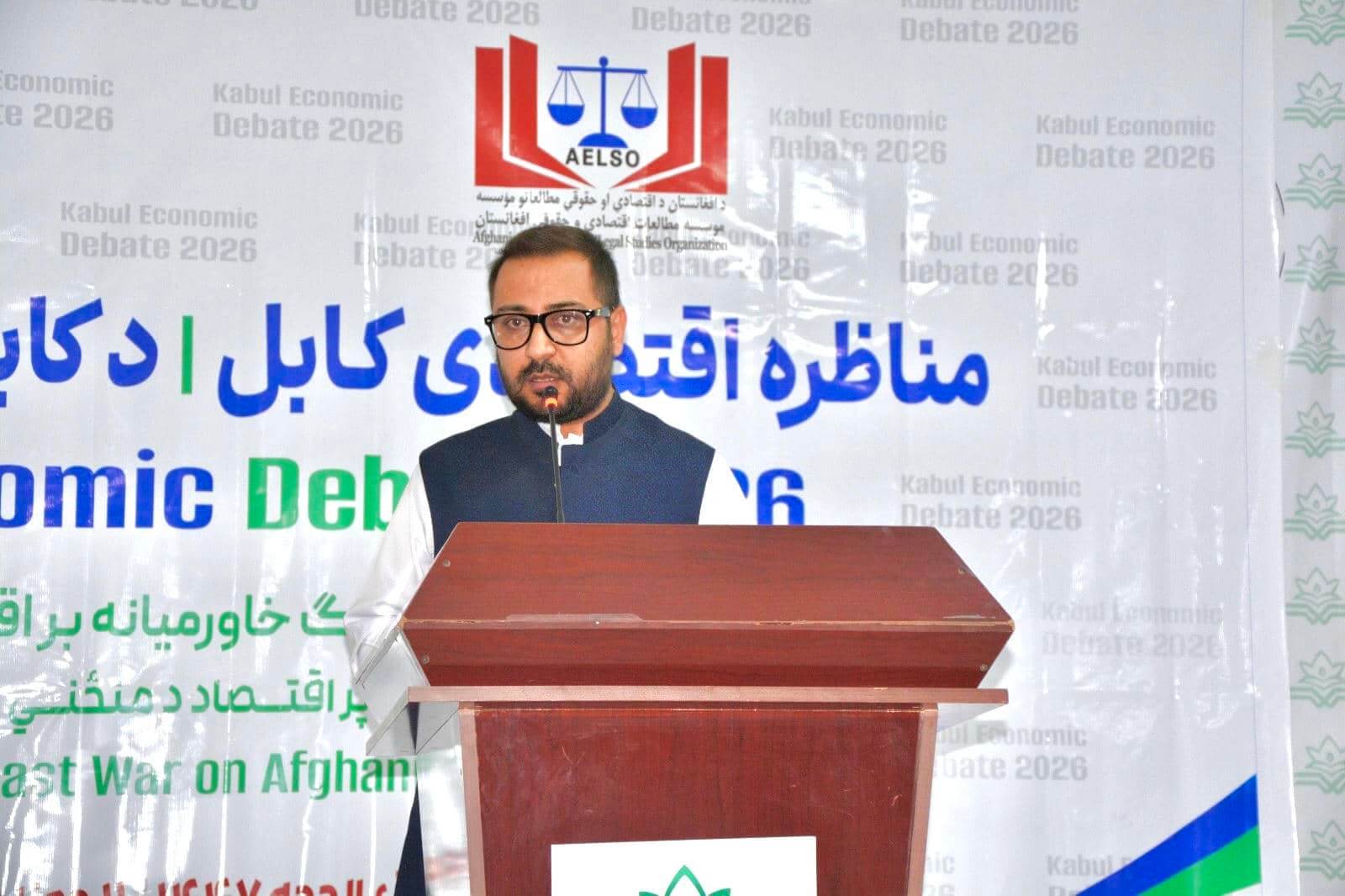
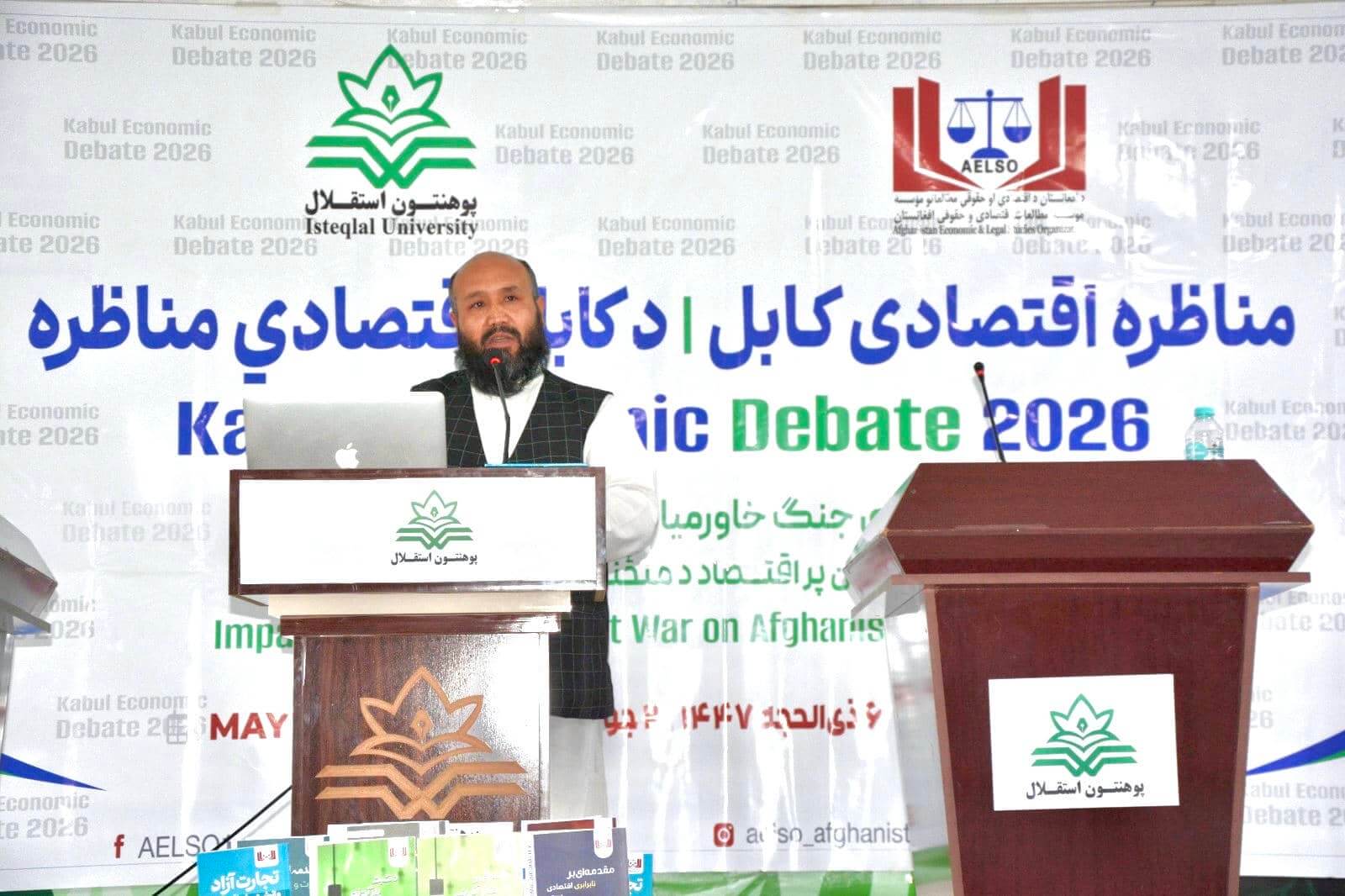
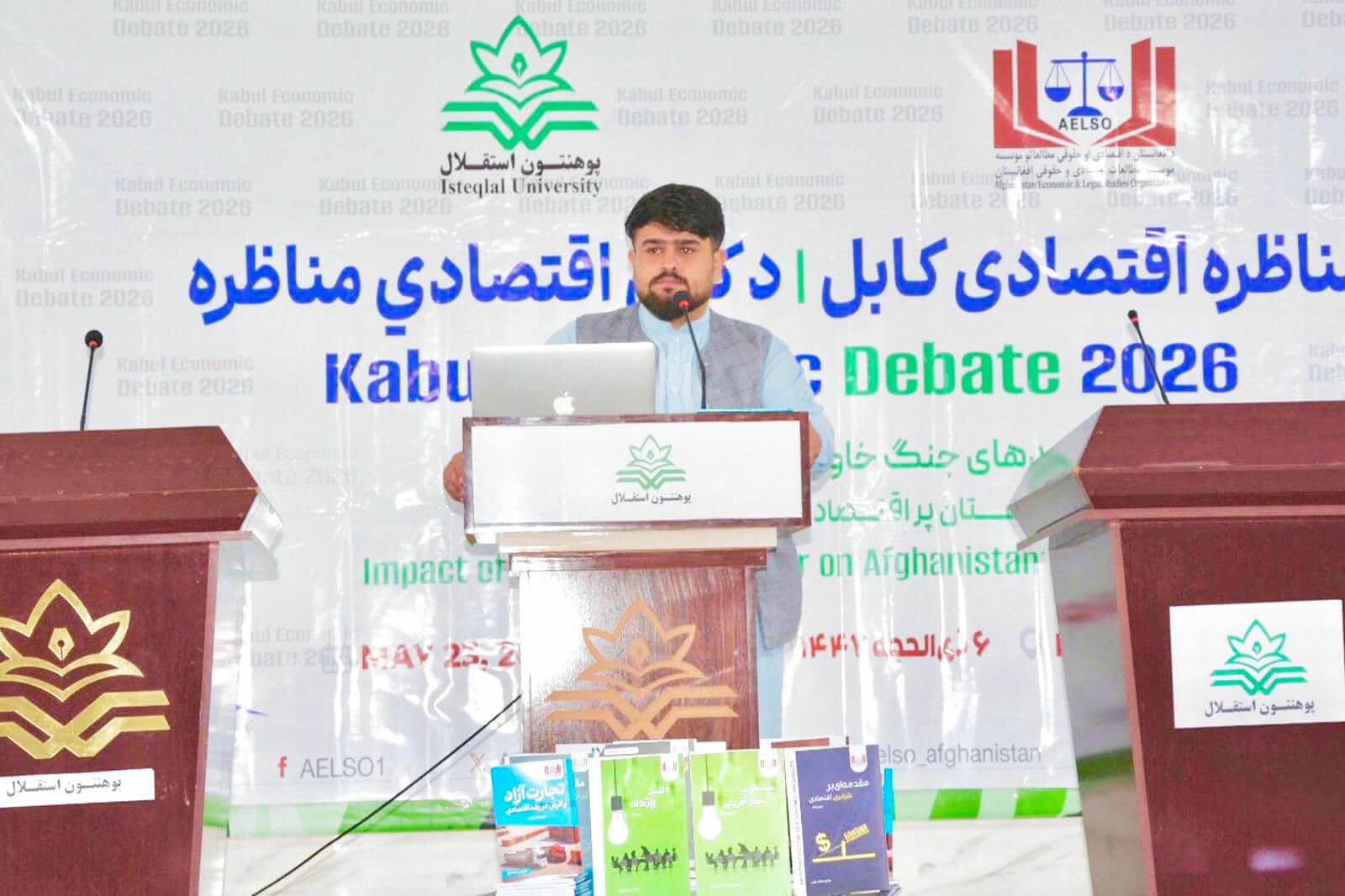
Mohammad Younus Yari, a political science expert, stated: “The continuation of war in the Middle East not only reshapes regional political dynamics but also directly affects Afghanistan’s trade routes and economic interactions.”
Similarly, Mohammad Zaker Rasooli, an economic expert, added: “Dependence on imports and the fragility of the economic structure have made Afghanistan highly vulnerable, such that any regional instability quickly manifests in rising prices, reduced investment, and increased pressure on people’s livelihoods.”
Alongside analyzing challenges, participants also proposed practical solutions to mitigate economic risks and better utilize existing opportunities. These included strengthening domestic production, expanding regional trade cooperation, diversifying economic resources, and supporting small and medium-sized enterprises. These perspectives reflected a strong commitment to identifying realistic, capacity-based solutions.
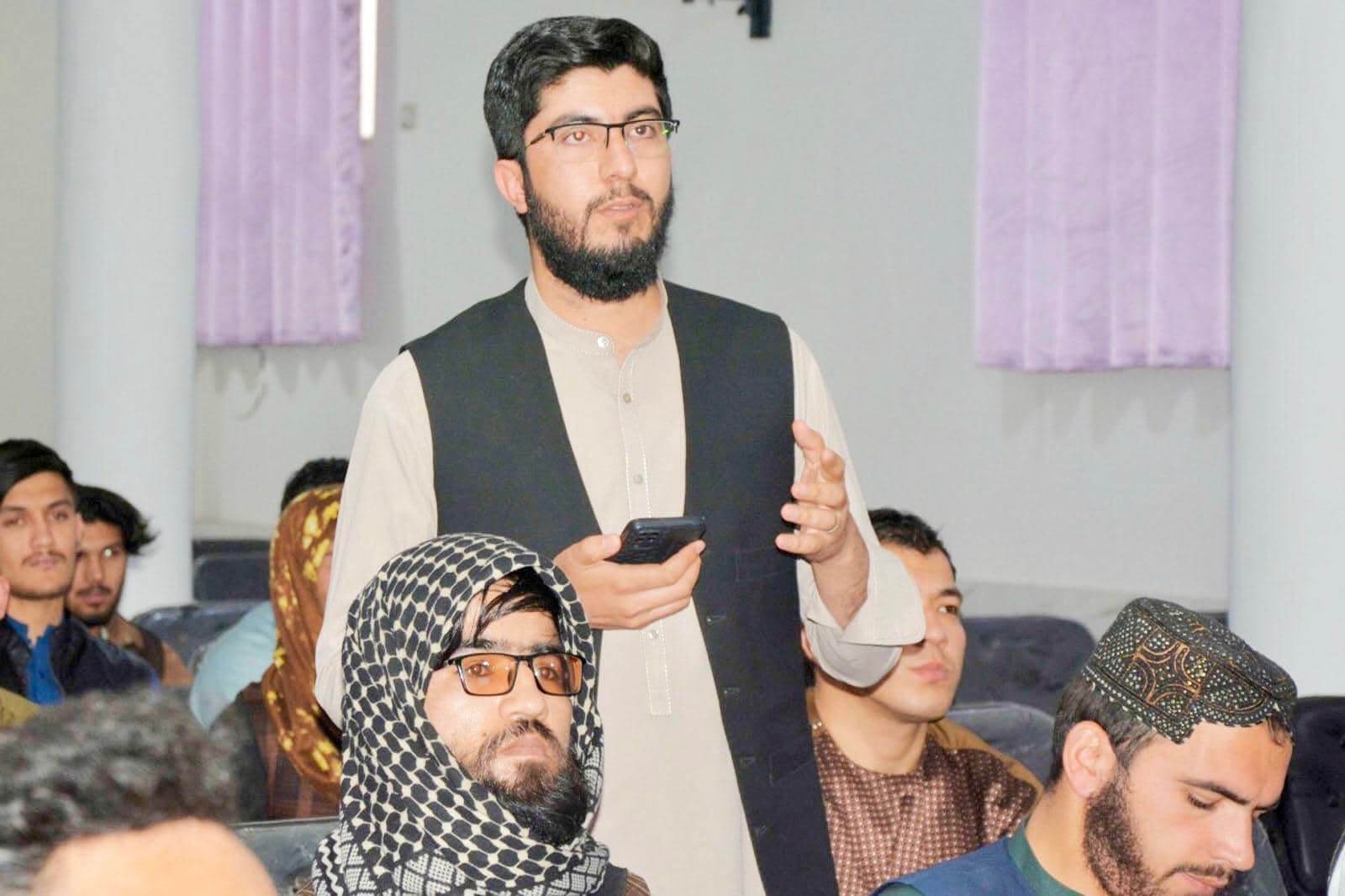
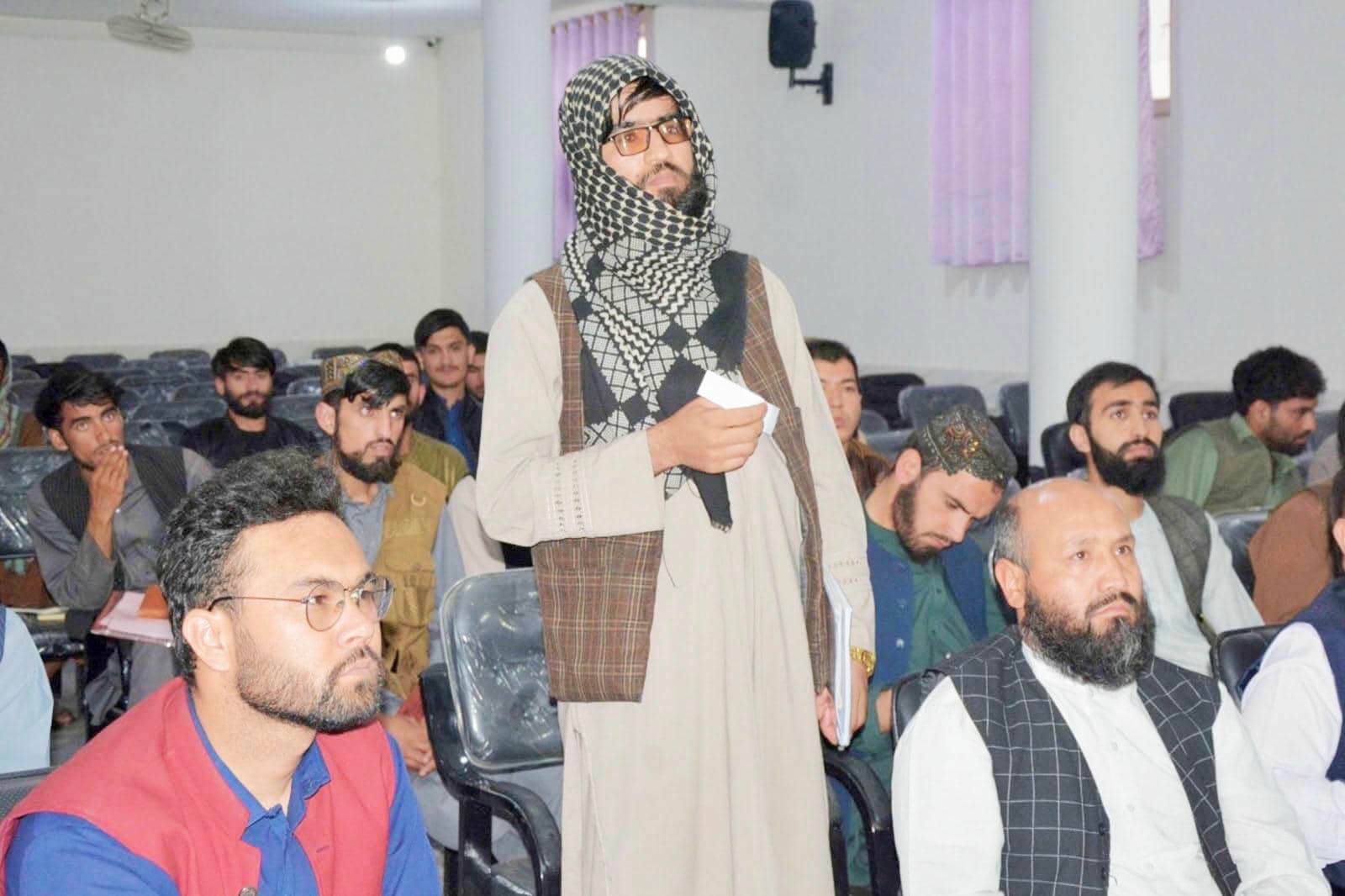
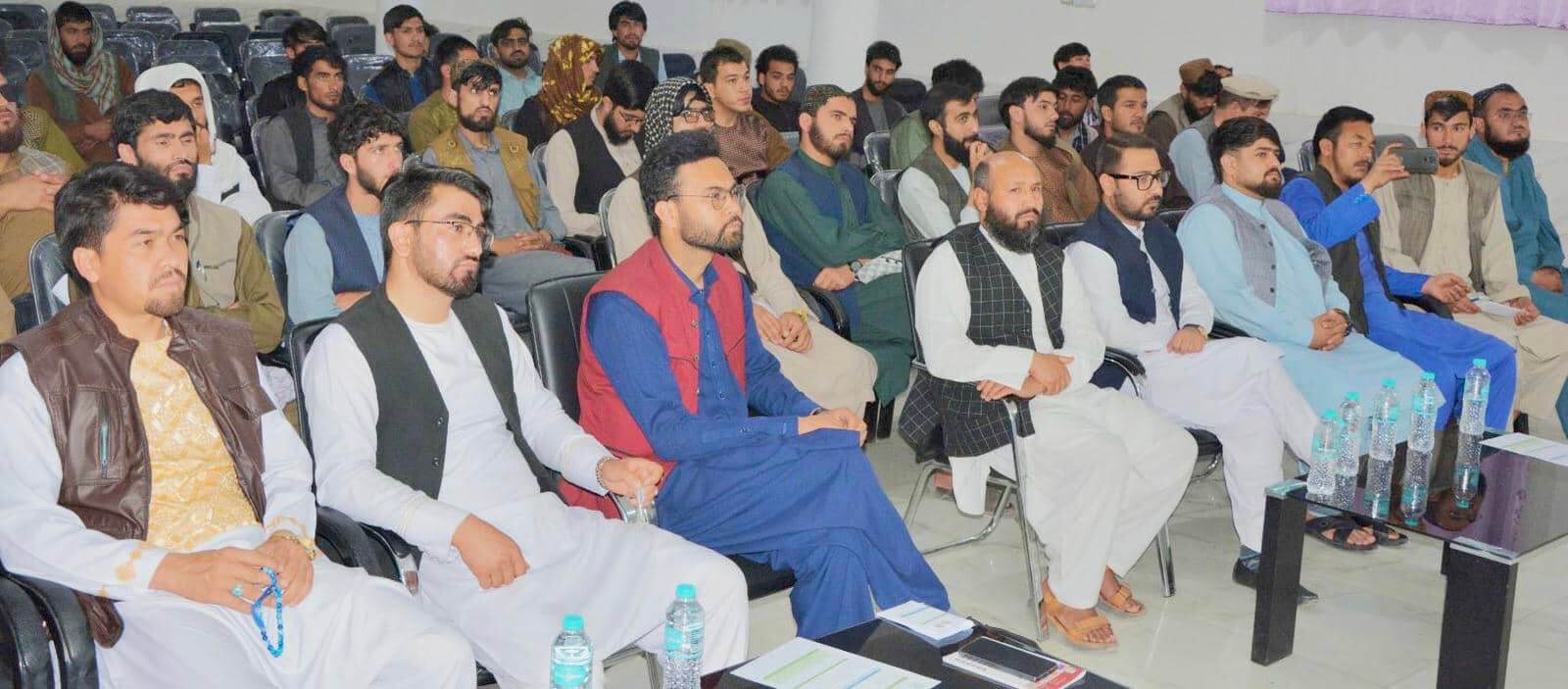
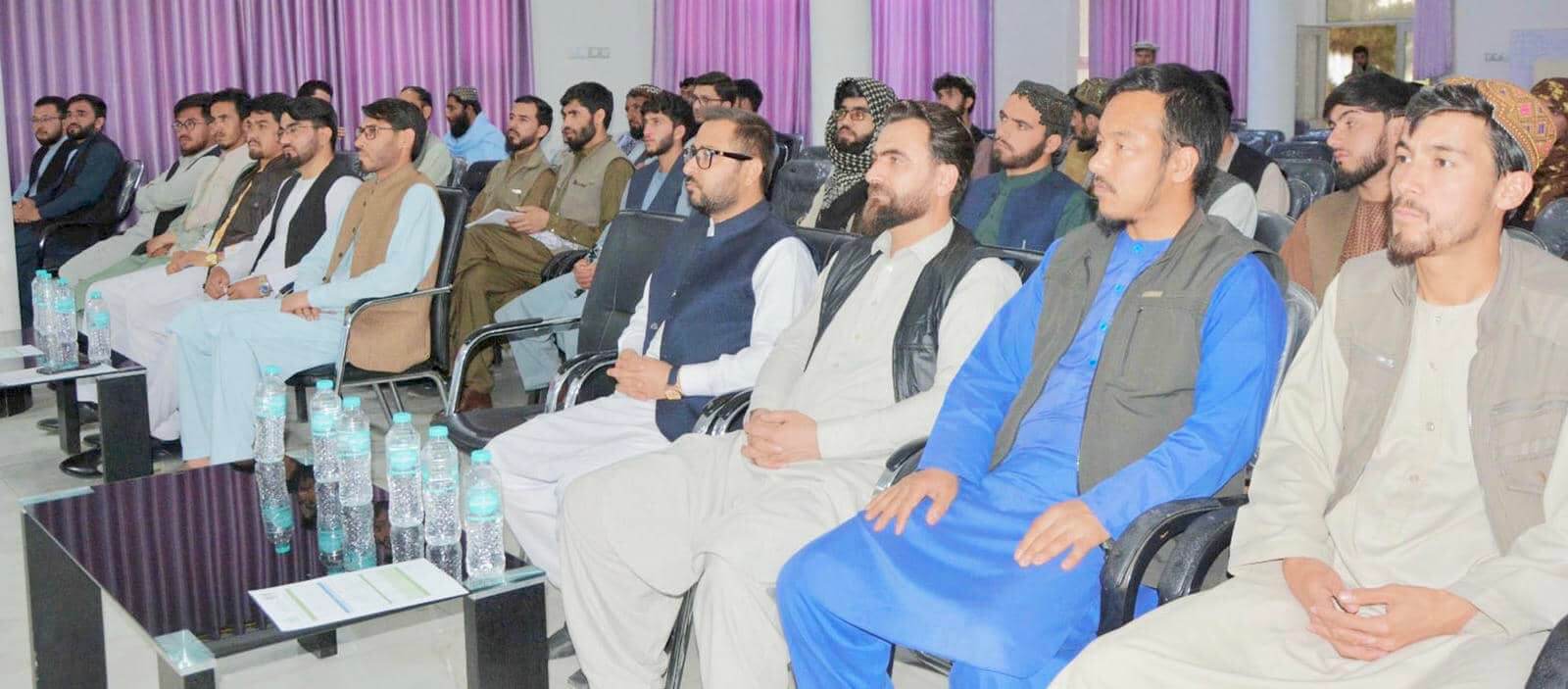
The debate was marked by active participation, with several students and attendees raising questions and sharing their views throughout the session. This engagement enriched the discussion and underscored the importance of such academic programs in fostering a culture of dialogue and critical thinking.
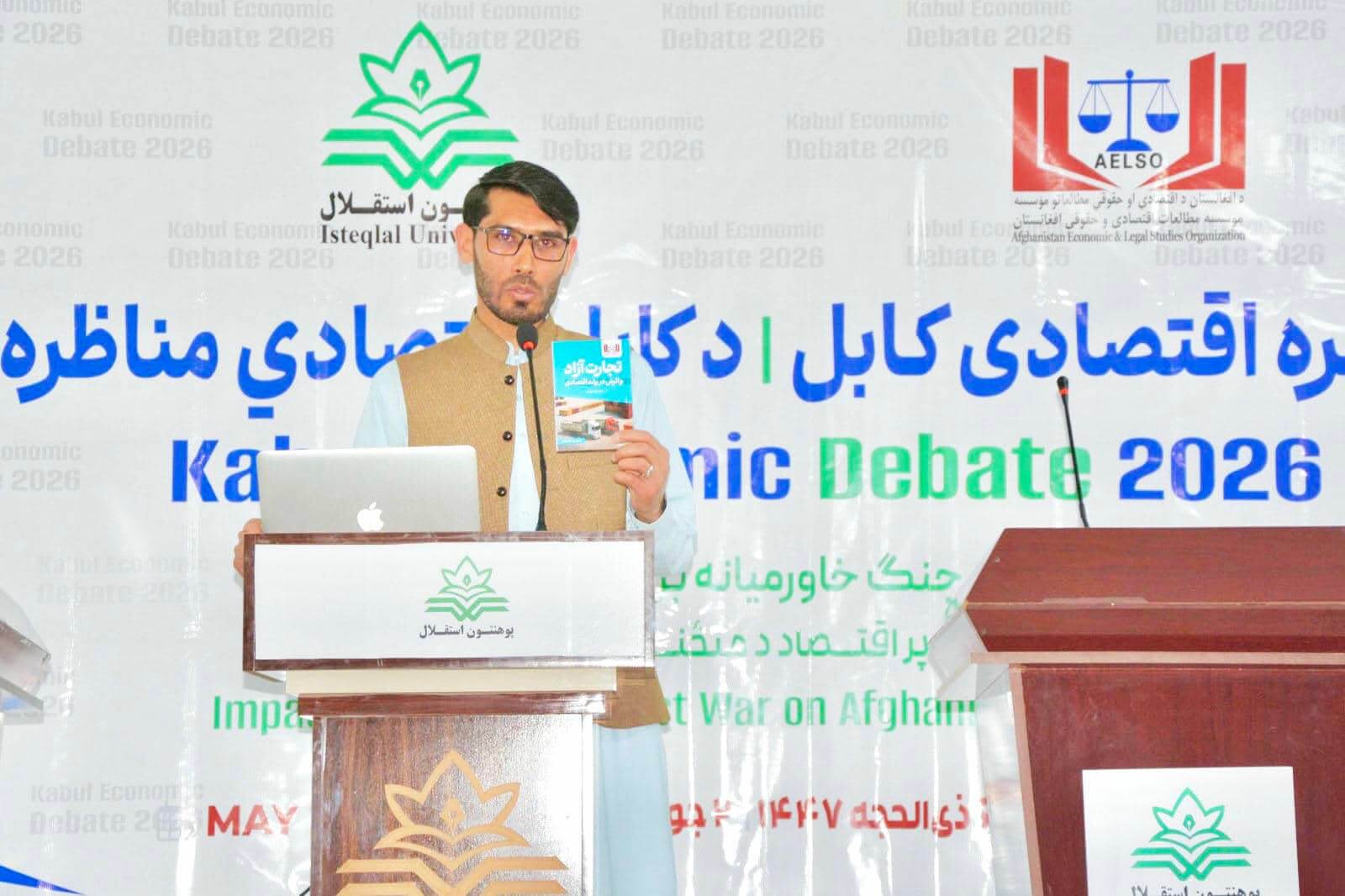
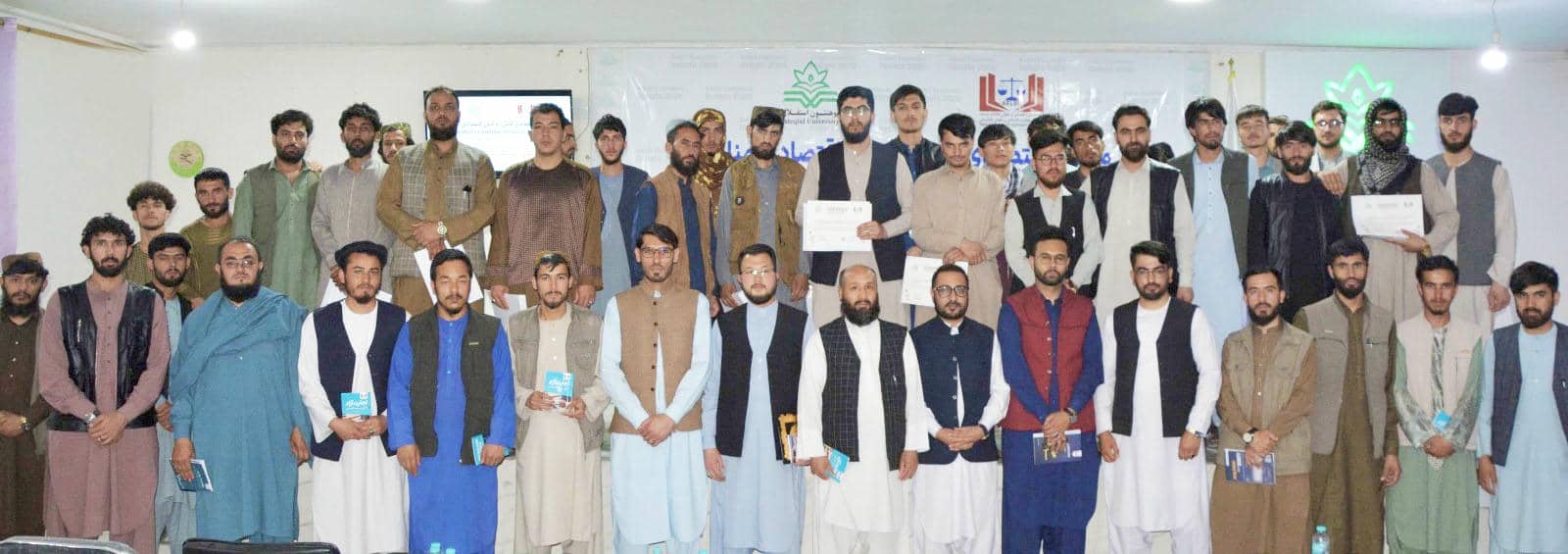
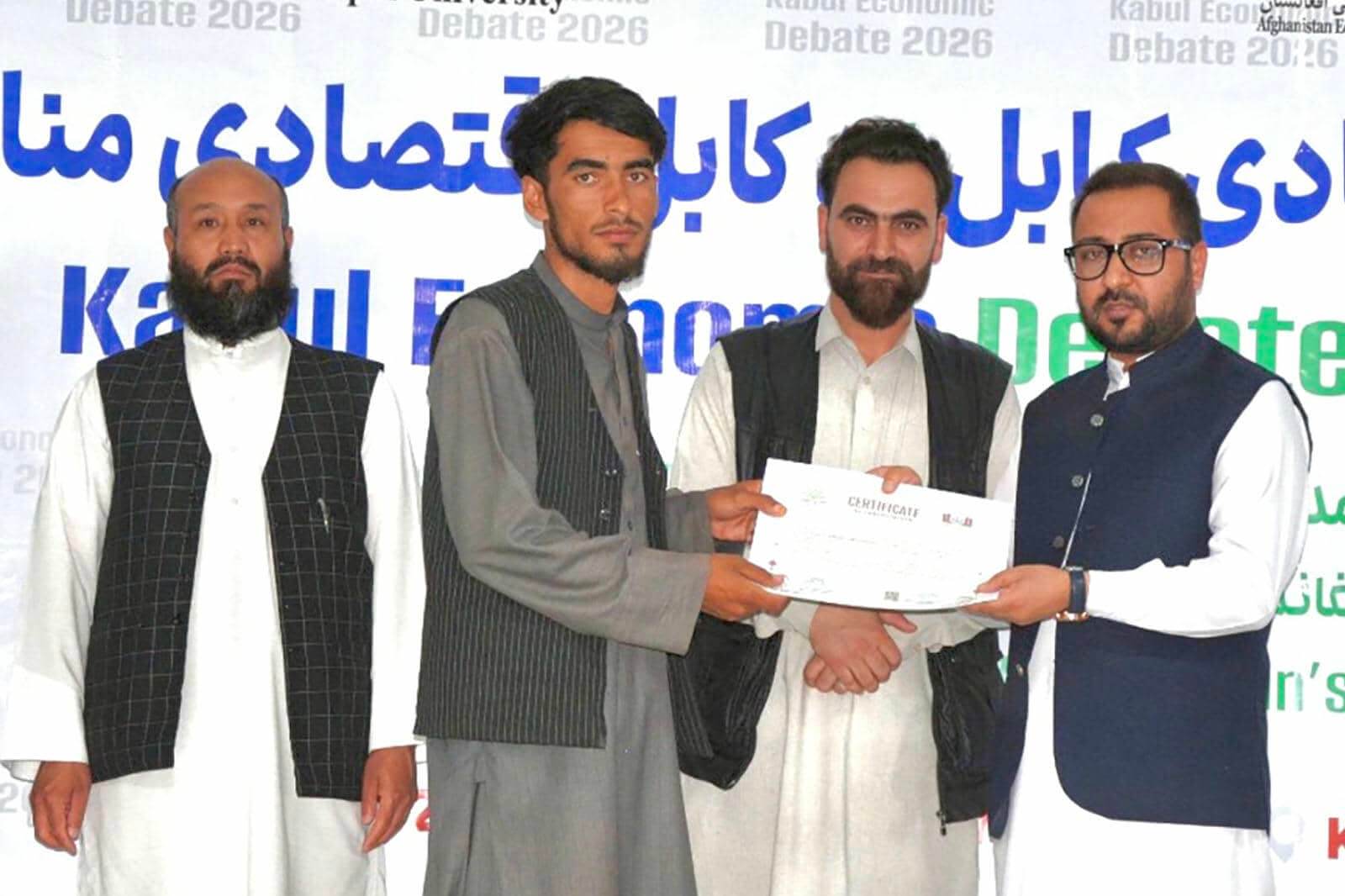
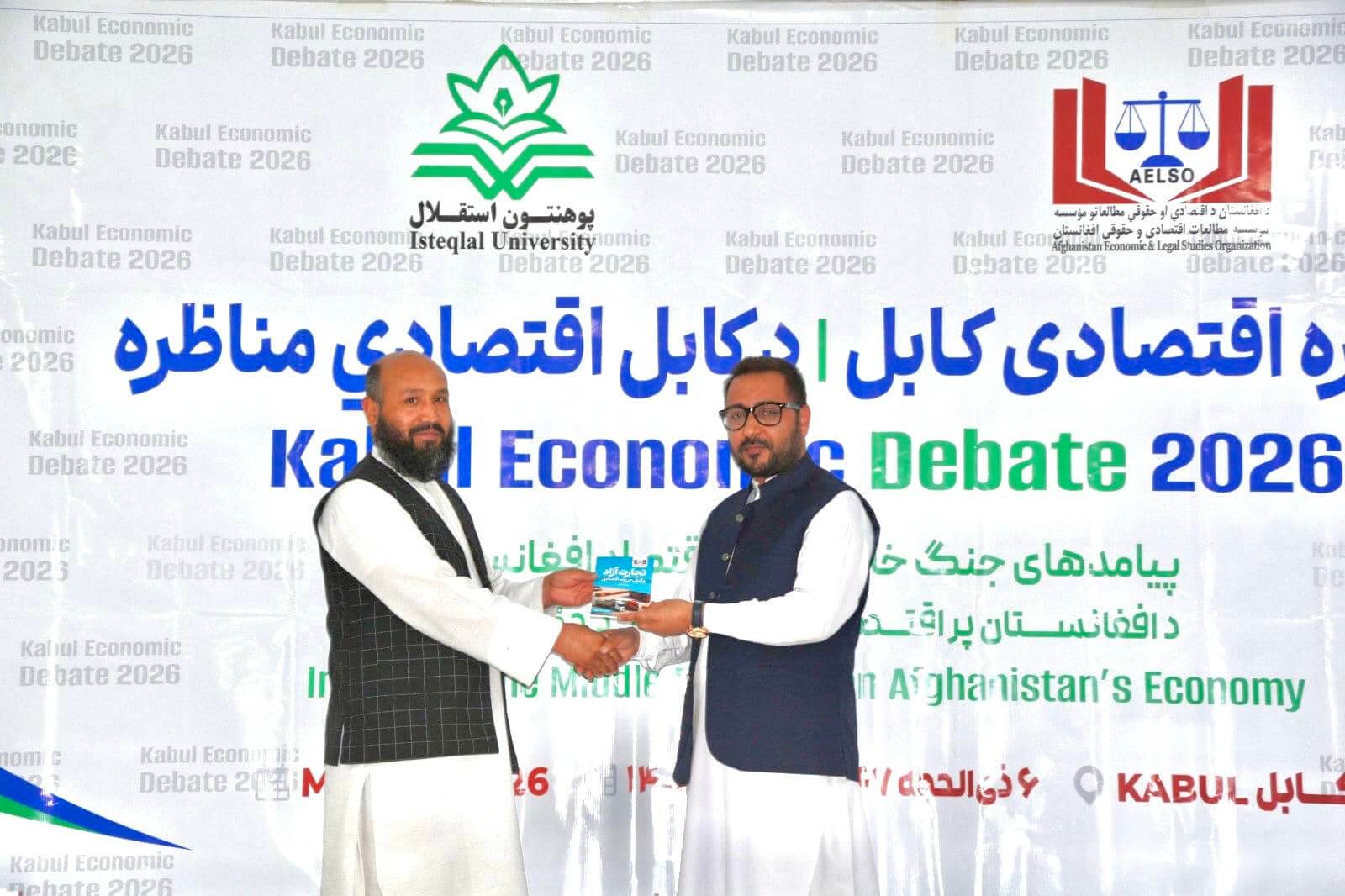
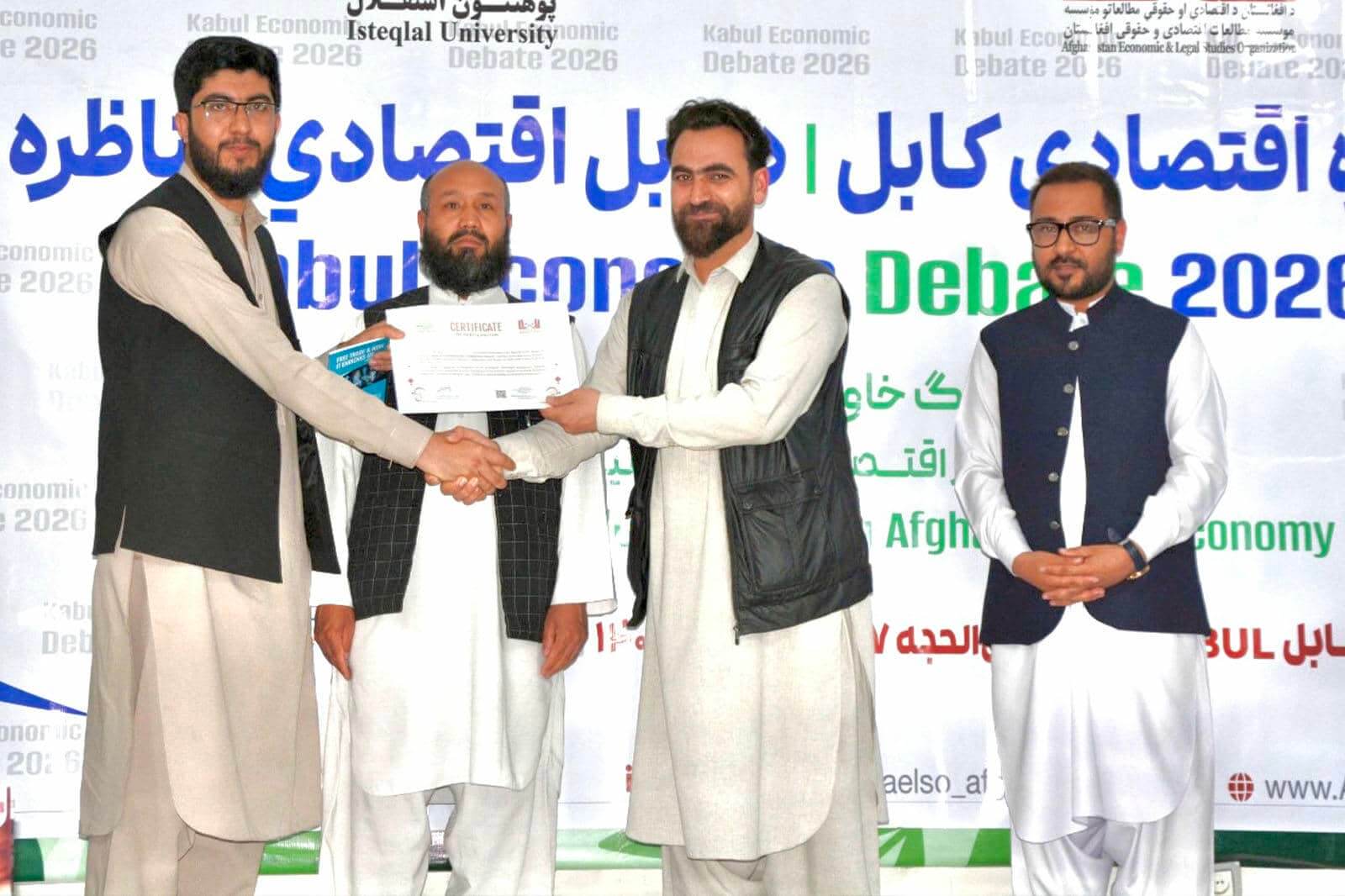
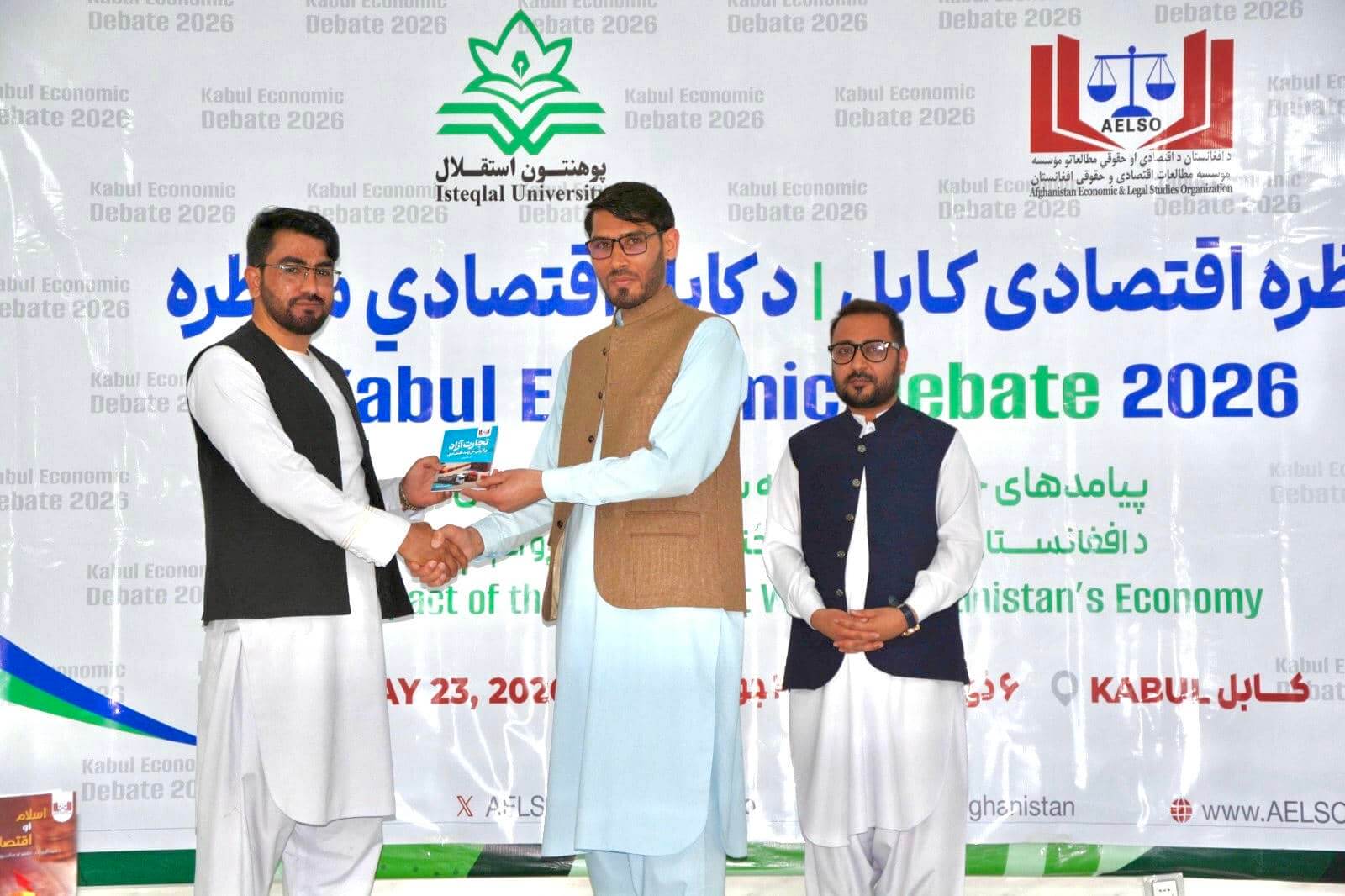
The event concluded with closing remarks from the debaters and the introduction of a book titled “Free Trade and Its Impact on Economic Growth” as a relevant academic resource. Certificates were distributed to participants, and books were presented to guests and faculty members of Independence University.
Participants emphasized the importance of continuing such initiatives and strengthening collaboration between academic institutions and policymakers. They noted that the Kabul Economic Debate represents an important step toward enhancing economic awareness and advancing scholarly discourse in Afghanistan.