 For the tenth consecutive year, saffron from Afghanistan’s Herat province has been awarded the title of the world’s highest-quality saffron by the International Taste Institute.
The competition was held in Brussels, Belgium, among the top four saffron-producing countries in the world, Afghanistan, Iran, Spain, and Greece.
Jalil Ahmad Maleki, the head of one of Herat’s saffron companies, said: “The International Taste Institute annually requests samples from countries involved in saffron production. After testing and evaluating the samples, the institute determines the highest quality. Other countries were also in the competition, but fortunately, we secured first place.”
Seyed Masoud, head of another saffron company in Herat, added: “Our request from the de facto government is to support national traders in saffron exports and to facilitate fast, secure, and affordable transport for them.”
Herat saffron has many customers in global markets.
According to local officials, saffron exports from Afghanistan to various countries have increased in recent months.
Abdul Khaleq Khodadadi, head of the Afghanistan Saffron Consortium, said: “Many countries around the world are highly interested in Afghan saffron. This interest is due to its natural purity and high quality. Most countries prefer to buy Afghan saffron.”
Local officials in Herat say that in recent years, saffron harvesting and processing in the province have become more standardized. The increase in both exports and saffron prices has led to greater interest among Herat farmers in cultivating the crop.
Mohammad Ebrahim Adel, head of the Afghanistan Saffron Union, stated: “Saffron is a commercial crop. I can say that this year, over 1,500 hectares of land have been added to saffron cultivation. Traders, farmers, and industry workers have been encouraged to expand its production.”
According to data from the Afghanistan Saffron Union, over 40 metric tons of saffron have been harvested in the country this year.
Union officials also report that 12,000 hectares of land across Afghanistan are under saffron cultivation, employing more than 80,000 people in its planting and harvesting.
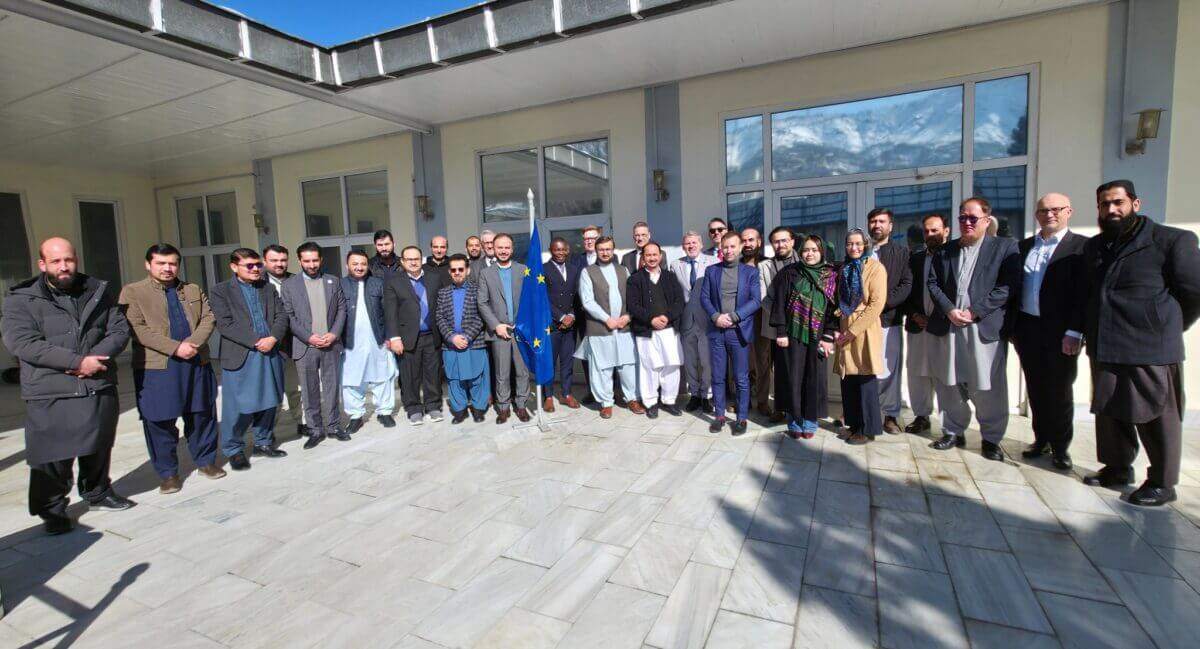 The European Union has committed 15 million euros ($16.3 million) to support access to finance for micro, small and medium-sized enterprises (MSMEs) in Afghanistan, the EU delegation said on Thursday.
The funding will be channelled through the Afghan Credit Guarantee Foundation under the second phase of the “MSME Access to Finance for Livelihoods in Afghanistan” programme, known as MALA II, which aims to strengthen economic resilience and promote sustainable livelihoods.
The new phase builds on an earlier programme that concluded in 2025 and will focus on expanding sustainable finance, with particular attention to green and climate financing, returnees, agricultural businesses and women-led enterprises, especially in underserved areas, the EU said.
Under the program, partner financial institutions will be supported to expand lending through risk-sharing mechanisms and credit guarantees, while MSMEs will receive targeted grants and technical assistance to build capacity. The initiative also includes efforts to develop Islamic finance products, automate banking processes and expand digital and branch-based financial services.
“The European Union remains committed to investing in Afghanistan’s economic growth and job creation,” said Eric Beaume, head of cooperation at the EU Delegation to Afghanistan. He said the first phase of the program helped support more than 55,000 jobs and mobilised 68 million euros in financing.
Executives from Afghan financial institutions said the program had played a key role in improving access to credit. Fernand Pillonel, chairman of the supervisory board of OXUS, said the grant scheme had enabled small businesses to secure financing.
Ziauddin Haidari, chief executive of First MicroFinance Bank, said technical assistance funded by the programme had improved operational efficiency and could help banks reach underserved areas by lowering transaction costs through digitisation.
Khisrow Fazli, chief executive of Ghazanfar Bank, said credit guarantees provided through the Afghan Credit Guarantee Foundation were essential for expanding MSME financing.
Afghanistan’s private sector has struggled with limited access to finance, weak infrastructure and economic isolation since the Taliban returned to power in 2021. International donors have increasingly relied on targeted programmes aimed at supporting livelihoods and financial inclusion while avoiding direct engagement with the Taliban authorities.
 The 31st edition of the “Gulfood” exhibition in Dubai concluded on Friday, Jan 31, 2026.
Recognized as one of the world’s largest events in the food and beverage industry, this year’s exhibition hosted representatives from 195 countries.
More than 10 Afghan exhibitors also participated, showcasing Afghan products including dried fruits.
Zalmay Bahaduri, an Afghan exhibitor, said: “Let’s participate in exhibitions so that our products gain more presence in global markets.”
Mohammad Rabi Zamani, another Afghan exhibitor, added: “We had a major achievement. We call on the de facto government, especially the Ministry of Industry and Commerce, to provide more opportunities for us.”
Meanwhile, Haji Obaidullah Saderkhail, head of the Afghan Business Council in the UAE, emphasized the importance of Afghan traders’ participation in the event. He noted that showcasing Afghan products at such international platforms can help boost exports and strengthen the global presence of Afghan goods.
“For 31 years, the UAE has organized this exhibition, and all companies, including Afghanistan, benefit from it and use it for market expansion,” Saderkhail stated.
Abdul Qasim Amarkhail, head of Afghanistan’s Dried Fruits Exporters Union, also commented: “Afghan traders, by the grace of God, achieved a lot and signed major contracts. We are working to secure more booths for Afghans in future exhibitions.”
Held annually at the end of January in Dubai, UAE, the Gulfood exhibition aims to promote, market, and expand global trade in the food and beverage sector. According to representatives from various countries, approximately 1.5 million tons of food products were showcased this year.
 The Food and Agriculture Organization and the Asian Development Bank are rolling out a $100 million initiative to strengthen food and nutrition security and restore agricultural livelihoods for more than one million vulnerable people in Afghanistan, the FAO said.
The two-year project aims to support about 151,000 households, or roughly 1.06 million people, including returnees from Pakistan and Iran, host communities, and families affected by recent earthquakes and floods.
FAO said the initiative would help rural households rebuild disrupted agricultural production systems, protect livestock and restore livelihoods amid overlapping crises that continue to strain Afghanistan’s rural economy.
Agriculture remains the backbone of rural livelihoods in Afghanistan but suffers from low productivity, limited access to inputs and restricted market opportunities. Repeated natural disasters have destroyed crops, livestock and irrigation systems, while large-scale returns of migrants have increased pressure on already fragile communities.
Although large-scale food assistance helped ease acute hunger during the peak of the food crisis, conditions have deteriorated again, FAO said. In 2026, about 17.4 million people are projected to face acute food insecurity, including 4.7 million classified as being in emergency conditions, marked by severe food consumption gaps and high levels of acute malnutrition.
FAO warned that persistent drought, combined with expected La Niña effects bringing below-average rainfall and above-average temperatures into early 2026, could further worsen food insecurity.
The new initiative will focus on climate-smart and people-centred interventions to boost agricultural production, improve nutrition and diversify rural livelihoods, with priority given to women-headed households and provinces most affected by climate and economic shocks.
The programme builds on an ongoing partnership between FAO and ADB. Since 2022, ADB has provided about $265 million in grants through FAO to support agricultural production and reduce acute food insecurity in Afghanistan.
Through that cooperation, FAO said it has reached an estimated 5.6 million vulnerable people, helping more than 841,000 households restore crop and livestock production and stabilise food supply chains during the humanitarian crisis.
FAO Director-General Qu Dongyu said the partnership had delivered measurable results, including higher crop yields and improved livestock ownership.
“For around $200, a wheat cultivation package can feed a family of seven for an entire year,” FAO said, adding that farmers using certified seeds achieved 27% higher yields and generated surplus seed for future planting seasons.
FAO said the initiative aims to move beyond emergency assistance and help Afghan families build resilience to future shocks in one of the world’s most vulnerable food security contexts.
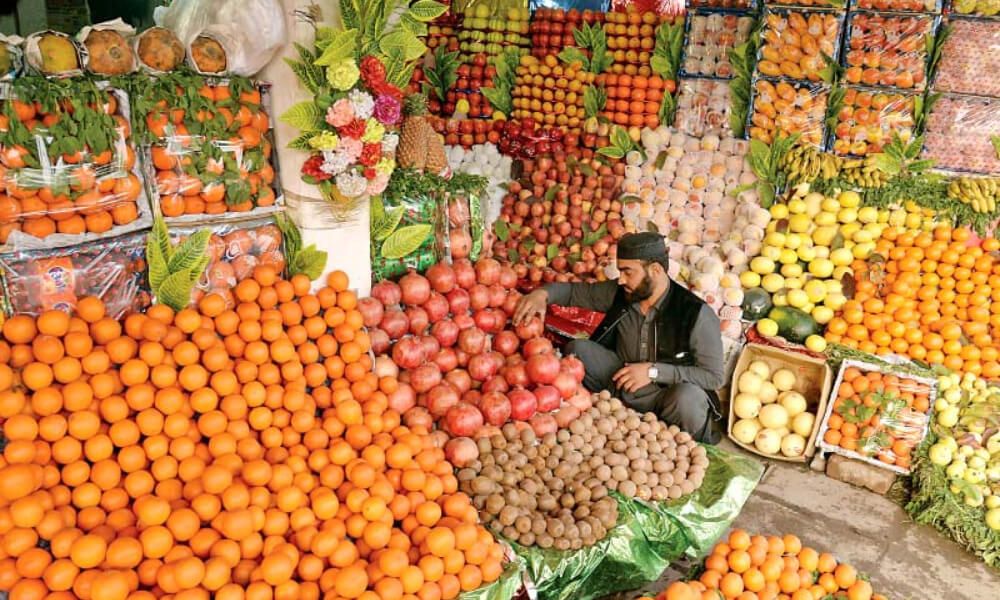 The Ministry of Industry and Commerce has announced that Afghanistan exported 317,517 tons of fresh fruit in the year 2025.
The exported fruits included apples, pomegranates, apricots, grapes, melons, watermelons, figs, and various other types of fruit, which were delivered to neighboring countries, regional markets, and other parts of the world.
However, the Afghanistan Chamber of Agriculture and Livestock says that the closure of trade routes, along with transportation and transit challenges during the current year, has had a significant negative impact on the export of fresh fruit.
Waseem Safi, Chief Executive Officer of the Chamber of Agriculture and Livestock, said: “Our exports are currently ongoing, but we face serious challenges in transportation and transfer costs. Previously, we could reach markets in the shortest possible time, but now we are forced to export through Chabahar or Bandar Abbas ports.”
Meanwhile, some economic experts emphasize that given Afghanistan’s agriculture‑based economy, greater attention must be paid to processing agricultural products, in addition to expanding export markets.
Shams‑ur‑Rahman Ahmadzai, an economic analyst, said: “Some commercial products faced difficulties this year. We can develop effective plans for the future. Standard cold storage facilities must be built to properly preserve agricultural products, and alternative export routes should also be identified.”
Another economic expert, Mirshaker Yaqubi, said: “More focus should be placed on alternative trade routes, and ports that have so far been underutilized must be prioritized.”
Although the Ministry of Industry and Commerce did not provide comparative data on the volume and value of fresh‑fruit exports between 2024 and 2025, the closure of trade crossings between Afghanistan and Pakistan in 2025 led to the spoilage of a portion of agricultural products and a decline in their selling prices in domestic markets.
 The third national and international specialized exhibition and conference on the construction, civil engineering, and reconstruction industry is scheduled to be held for five days, starting on February 3, at the Afghanistan International Exhibition Center.
According to organizers, companies from Uzbekistan, Kyrgyzstan, Iran, and China have been invited to participate, and dedicated booths have been allocated for them.
Mohammad Saber Latifi, Director General of the Afghanistan International Exhibition Center, said: “This exhibition, which will be held for five days starting on the 14th of Dalwa, includes participants from Uzbekistan, Kyrgyzstan, Iran, and China. Booths have been designated for their companies.”
Shokrullah Baqai, the event organizer, said: “This exhibition showcases building materials, including our local products, paints, rebar, and pipes. We have achieved self-sufficiency in these items, and as you know, we no longer import them. We are striving for full self-reliance in the near future.”
Meanwhile, several participants emphasized the importance of such exhibitions, viewing them as significant steps in economic growth and national reconstruction.
Mohammad Kamal Afghan, spokesperson for the Ministry of Urban Development and Housing, said: “Such exhibitions are valuable for the development and reconstruction of Afghanistan.”
Abdul Nasir Rashtia, head of the Iron Melting Union, said: “You witnessed dozens of foreign companies that came to Afghanistan and participated in this exhibition. You’ve seen the results, many collaborative projects have been carried out.”
In recent years, more exhibitions have been held across the country to showcase domestic production and attract investment.
 A one-day international conference was held in the United Arab Emirates, supported by the Afghan-American Chamber of Commerce and other partner institutions, to promote mutual cooperation in banking relations.
The event brought together representatives from dozens of international banks, global institutions, Afghan entrepreneurs, and investors. The discussions focused on creating dialogue between Afghan banks and foreign partners, expanding banking cooperation, and facilitating financial and commercial transactions.
Participants also addressed issues such as the status of banking relations, the lack of adequate digital financial services, and limited access to financial resources.
Najibullah Amiri, Executive Director of the Afghanistan Banks Association, said: “Participants welcomed the recent progress in Afghanistan’s banking sector and clearly emphasized that the sector is not under any sanctions. It was also highlighted that Afghan banks conduct hundreds of millions of dollars in regular annual transactions with the global trade market.”
Haji Obaidullah Sader Khail, head of the Afghan Business Council in the UAE, said that 85% of Afghan businesspeople live in the United Arab Emirates, making this conference especially relevant to the banking sector.
Several other Afghan entrepreneurs also called on international investors to take advantage of the investment opportunities in Afghanistan.
Saderkhail added: “This conference is very important. It took over a year to organize. We had planned to hold it earlier, but it was delayed. Fortunately, it was held today. The event carries special significance for our banking sector because 85% of our large business community has been living in Dubai for the past 35 years.”
Ehsanullah Kamawal, head of the Afghan Business Association in Istanbul, said: “There are great investment opportunities in Afghanistan today. We urge everyone to invest, especially during times of crisis when opportunities grow.”
According to the Afghanistan Banks Association, it has called on international banks and the global community to support the stabilization and development of Afghanistan’s banking sector through the strengthening and restoration of mutual banking ties.
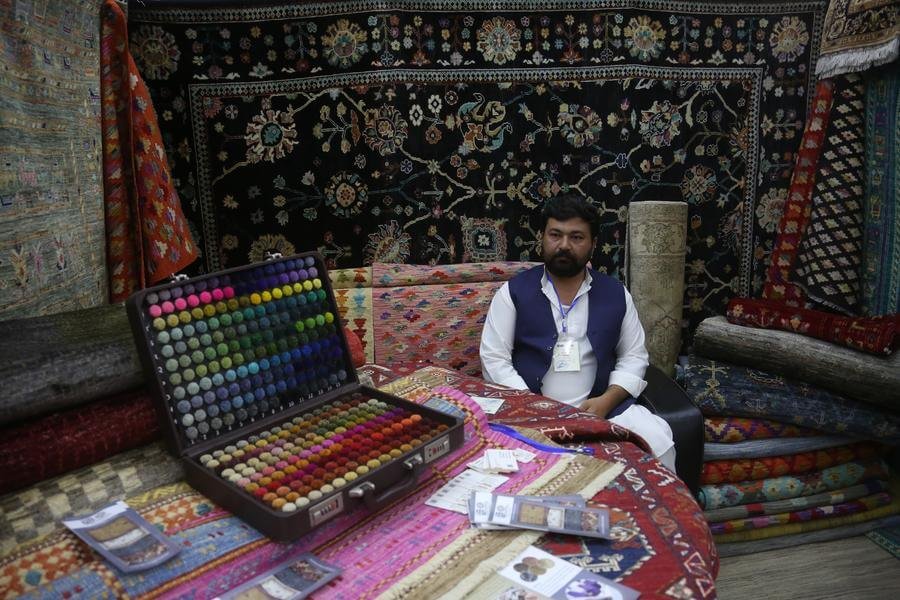
A three-day exhibition of domestic products was held in Zaranj, the capital of Nimroz province, showcasing products from various Afghan provinces in 60 booths.
Masood Haqmal, the event organizer, said: “The goal of this exhibition is to market local products. Through this event, we want to directly show people that they should say no to foreign goods and support domestic production, which is also high in quality and should be used.”
Participants noted that public interest in Afghan-made goods has increased compared to previous years.
They stressed the need for government support to promote domestic industries and help them compete with imports.
Farshid Ataee, a participant, said: “Such exhibitions are important to make people aware that Afghan-made products are high quality.”
Noor Ahmad Zarifi, another exhibitor, said: “These types of expos should be held in every province so people learn about local products.”
Asadullah Amini, another participant, said: “We are working to produce high-quality goods and need government backing.”
The event was organized in coordination with the Ministry of Industry and Commerce, with the aim of promoting and marketing domestic production.
A variety of sectors were represented at the expo, including industry, construction, agriculture, mining, handicrafts, and pharmaceuticals.
Abdul Ahad Sharifi, a producer, said: “The country is moving toward self-sufficiency. We are cutting reliance on foreign markets and depending on local production.”
Another producer, Abdul Hamid, stated: “Domestic products are better than foreign goods and must be supported.”
Previously, the Ministry of Industry and Commerce held a similar exhibition in Farah province. The ministry said that such expos aim to boost the economy, create opportunities for producers, increase exports, generate jobs, and encourage people to buy local products.
 The Afghanistan-Pakistan Joint Chamber of Commerce has called on Kabul and Islamabad to allow the 10,000 containers that have been stuck at ports for around 100 days due to road closures to pass through just once.
Members of the chamber say re-exporting these containers would cause heavy financial losses, estimated at $75 million.
Economic analyst Abdul Nasir Rishtia said: “If these containers are sent back, it will cause major losses for traders. The de facto government should work with Pakistan to create a mechanism to restore trade to normal, or at least allow these stuck containers to pass.”
Figures show that the trade disruption over the past 105 days has caused Afghan exporters losses of $233 million, and Afghan importers nearly $126 million.
The head of the chamber stressed that efforts by the private sector in both countries to release the goods are continuing, but governments must now take action and resolve the issue.
The Afghanistan-Pakistan Chamber of Commerce head, Khan Jan Alokozai, said: “Efforts are ongoing to return to talks, but our discussions will not help unless the governments are determined to solve the problem.”
Economic analyst Qutbuddin Yaqubi said: “Both sides should not use trade for political gain, and politics and trade must be separated.”
Pakistani media reported that road closures have also affected Afghanistan’s exports to India through Pakistan and the Wagah border, which were worth $200 million annually, causing Afghan exporters losses of $58 million.
Meanwhile, Pakistan has also suffered losses due to trade disruptions, with exports worth $437 million to Afghanistan and $262 million to Central Asia affected.