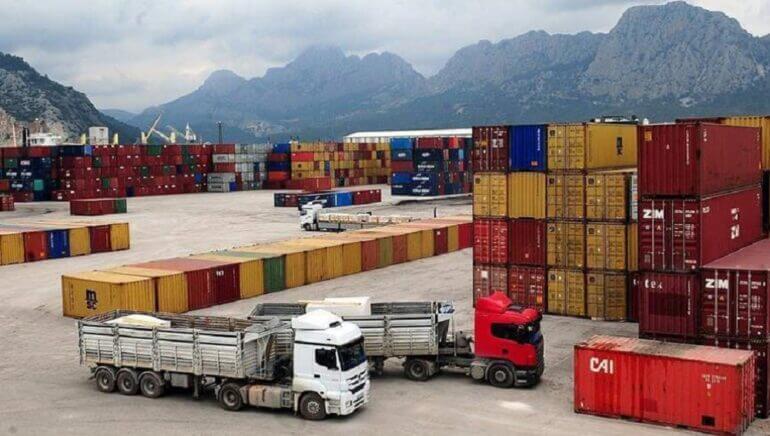
 The World Bank, in its latest report, has stated that despite the closure of crossings with Pakistan, Afghanistan’s exports in October increased by 13% compared to September.
According to the report, Afghan traders successfully redirected their export goods toward India and Uzbekistan during this period, and rising demand from neighboring countries for Afghanistan’s agricultural products contributed to this growth.
The World Bank added: “Afghanistan’s food exports reached 238.4 million dollars in October, reflecting an annual growth of 8.6 percent. Food exports during the first seven months of the 2025 fiscal year have risen by more than 22 percent. However, coal exports dropped significantly due to the closure of routes through Pakistan.”
The report further states that Afghanistan’s total exports in the first seven months of the 2025 fiscal year reached 1.1 billion dollars, representing an annual growth rate of 10 percent.
According to the report, India was the largest importer of Afghan goods in October, receiving 50 percent of Afghanistan’s total exports during that month.
Regarding imports, the World Bank said that Afghanistan’s imports in October also increased by 2 percent compared to September, reaching more than 1.1 billion dollars.
Another section of the report states: “Afghanistan imported goods worth 7.6 billion dollars during the first seven months of the 2025 fiscal year, showing an annual growth rate of 21 percent. Imports of raw materials rose by 45 percent during this period, indicating greater industrial activity in the country.”
The World Bank also reported that the return of Afghan migrants from Iran and Pakistan, recent earthquakes in eastern and northern Afghanistan, internet and telecommunications disruptions, and shifts in regional priorities were among the factors putting pressure on Afghanistan’s economy.
 The fourth round of the Imam Abu Hanifa International Exhibition in Kabul continues to receive widespread attention from citizens and foreign guests.
The EU Chargé d’affaires in Afghanistan and the Union’s Senior Private Sector Expert, during their visit to the exhibition, emphasized the crucial role of women in developing Afghanistan’s private sector.
Veronika Buskovic-Pohar highlighted the importance of women’s education in Afghanistan, saying that serious attention to this area can strengthen the economy and foster sustainable development.
Veronika emphasized that women had a designated section at the exhibition where, with support from partners, they could access financial resources and engage in work. She noted that employment opportunities had been created for them, which she considered important. However, she believed that providing women with knowledge and education was even more critical, suggesting that the development of the private sector depended on ensuring educational opportunities for women.
Meanwhile, the exhibition organizers report a significant increase in visitor numbers.
According to the chamber officials, over 100,000 people have visited the exhibition so far, and more than $300 million in trade agreements have been signed between the private sectors of Afghanistan, Iran, India, and Uzbekistan.
Arian Azimi, Deputy Investment Director of the Chamber of Commerce and Investment, said: “We invite all our fellow citizens to come to the exhibition and explore various sectors. We also call on the private sector to come and sign agreements.”
At the same time, some exhibitors and visitors of the Imam Abu Hanifa Exhibition shared differing opinions about the quality and opportunities of the event.
Basharat, a visitor: “I am very happy to see the abundance of our domestic products. The newly established companies gave me motivation.”
Ehsanullah, a visitor: “I came from Khost to see the exhibition and I’m very happy that such an event is being held in our country, it’s a great opportunity for our production.”
Mujtaba, an exhibitor: “The exhibition has been very good for us, and people are becoming aware of domestic products.”
It is worth mentioning that the Imam Abu Hanifa International Exhibition is organized for seven days by the Chamber of Commerce and Investment.
The event features around 800 stalls, with over 300 foreign traders showcasing their products and services alongside domestic companies.
The Ministry of Industry and Commerce says that in the past seven months, bilateral trade between Afghanistan and India reached a value of $525 million.
According to the ministry’s spokesperson, of this total, $379 million worth of goods were exported from Afghanistan to India, with dried fruits accounting for the largest share.
Akhundzada Abdul Salam Jawad, spokesman for the ministry, noted: “Major export items to India include dried figs, saffron, asafoetida and its seeds, raisins, green cumin, pistachios and almonds. Imported items include medicinal drugs, raw materials for industrial factories, cotton textiles, auto parts, machinery and various garments.”
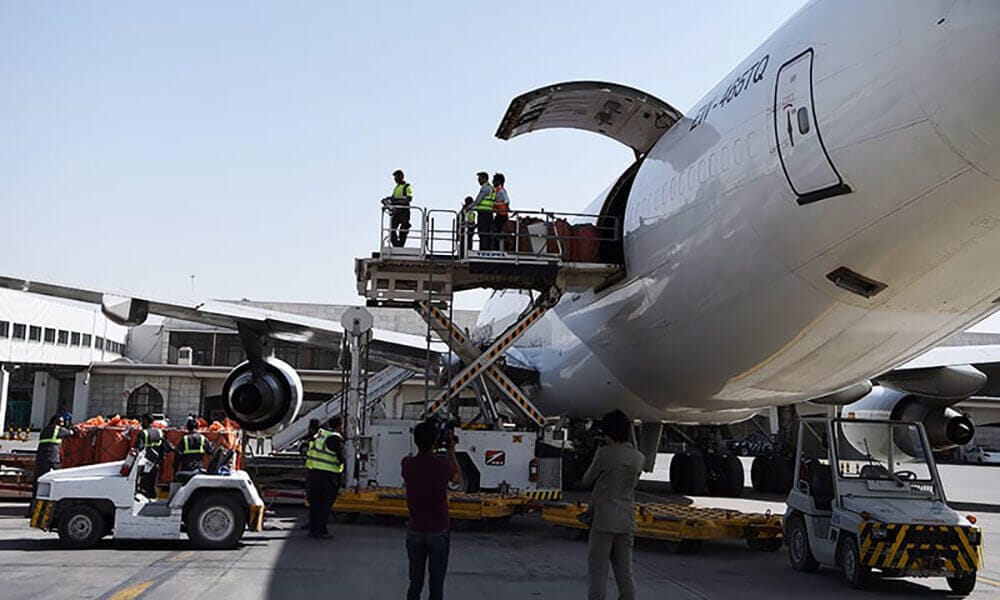
The Indian Foreign Ministry yesterday announced the resumption of cargo flights between the two countries.
Experts believe that air‑cargo corridors can serve as a suitable alternative to the Wagah land route and play a significant role in expanding trade volume with India.
Khanjan Alkhozi, a former board member of the Chamber of Commerce and Investment, said: “Air cargo is a very good alternative; however, assistance in pricing is needed so traders are not disadvantaged. Tax issues in the field also need attention. Air‑cargo is especially suitable for dried‑fruit exports.”
Mir Shakir Yaqubi, an economic analyst, added: “Now that air‑cargo routes have been resumed, I am confident it will have a positive impact on Afghanistan’s trade volume with India.”
This comes as Nooruddin Azizi, Minister of Industry and Commerce of the de facto government of Afghanistan, recently traveled to India to strengthen trade and economic relations and met with Indian officials.
 For the first time, a private pomegranate processing facility has begun operations in Kandahar.
Officials say the facility will help prevent pomegranate waste and facilitate the export of standardized pomegranate juice and seeds to international markets.
The facility has the capacity to process up to 10 tons of pomegranates per day into juice and seeds.
The factory’s owner, Abdul Nasir Adel, said: “We initially invested 2 million Afghanis here, but this investment will increase to 50 million Afghanis. This will allow us to offer standardized services in juice and seed production and create job opportunities for many people.”
Mohammad Hanif Haqmal, spokesperson for Kandahar’s Directorate of Agriculture, Irrigation, and Livestock, said: “This year, Kandahar harvested 274,000 metric tons of pomegranates. Some of these go to waste, but such facilities will reduce losses and increase farmers’ profits.”
Despite transit challenges with neighboring countries, Kandahar’s Chamber of Commerce and Investment reports successful pomegranate exports to Russia, Kazakhstan, and other countries.
Abdul Ahad Siddiqi, Head of the Kandahar Chamber of Commerce and Investment, said: “This will be the last year pomegranate growers face export issues. Our pomegranates have been exported to Russia, Kazakhstan, and Tajikistan, and exports to other countries are also expanding.”
Pomegranate farmers also see the establishment of local processing centers as a major boost to their livelihoods.
Farmer Sher Ali said: “Due to road closures, we had many concerns. But these centers will reduce our challenges. It’s a great opportunity and should be expanded.”
Farmer Samiullah said: “The establishment of pomegranate processing facilities is a great achievement for us. Our pomegranates will no longer go to waste.”
Kandahar’s pomegranates are internationally renowned, especially those grown in the Arghandab, Zherai, and Arghistan districts.
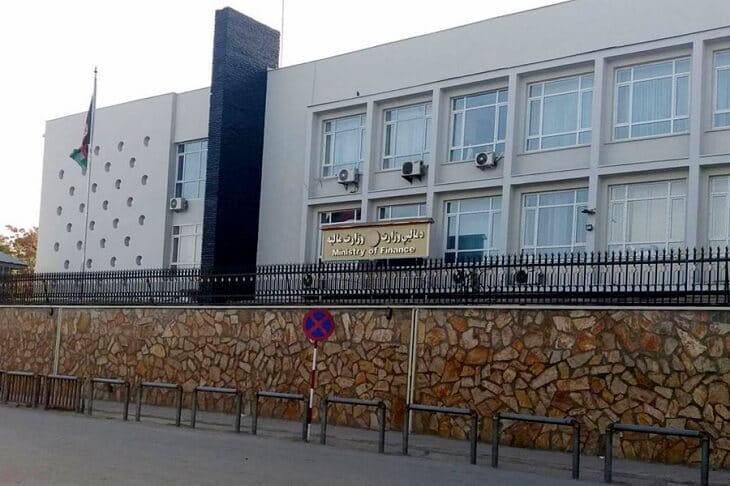 The de facto government of Afghanistan has invited Indian businesses to expand their presence in the country, offering a package of incentives designed to boost bilateral trade and investment.
Addressing an interactive session hosted by industry body PHDCCI in New Delhi on Friday, Afghanistan’s Minister of Industry and Commerce Alhaj Nooruddin Azizi said Kabul sees major opportunities for collaboration in mining, agriculture, health and pharmaceuticals, information technology, energy and textiles.
Azizi outlined several incentives aimed at drawing Indian investors, including a 1 percent tariff on raw materials and machinery, free land for industrial projects, reliable electricity supply, and proposed five-year tax exemptions for new industries — especially those established by returning Afghan refugees.
He also encouraged the involvement of Afghan Sikh and Hindu communities, emphasising that Afghanistan is committed to maintaining a “peaceful, inclusive and business-friendly environment.”
Bilateral trade between India and Afghanistan is currently valued at around $1 billion, with both sides taking steps to deepen cooperation. These include appointing commercial attaches in each other’s embassies and reactivating the joint working group on trade, commerce and investment.
Separately, the Indian government confirmed that air cargo services between the two countries will resume shortly. Anand Prakash, Joint Secretary at the Ministry of External Affairs, said the air freight corridor on the Kabul–Delhi and Kabul–Amritsar routes “has been activated,” with cargo flights set to begin “very soon.”
“This will significantly enhance connectivity and further strengthen our trade and commercial ties,” he noted, adding that both governments believe there is “substantial potential for further growth” in bilateral trade.
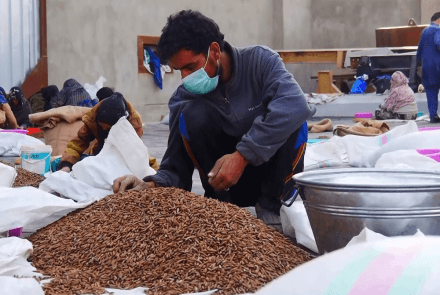 Pine nuts are considered one of Afghanistan’s major export commodities and are annually exported to regional and international markets.
The Ministry of Industry and Commerce has announced that in the first eight months of the current solar year, 645 tons of pine nuts valued at nearly $9 million were exported abroad.
According to Akhundzada Abdul Salam Jawad, spokesperson for the ministry, “Afghanistan’s black pine nuts have been exported over the past eight months of 1404 [solar year] to countries including China, India, the United Arab Emirates, Italy, Saudi Arabia, the United States, Kuwait, and others.”
Afghan pine nuts, known for their high quality, are in strong demand in multiple countries, especially China.
Some traders say that if exports are facilitated through more air corridors and transportation costs are reduced, the volume of pine nut exports could significantly increase.
Mahboobullah Mohammadi, one of the traders, stated: “Challenges still persist, including the lack of international trade exhibitions in most countries, the absence of Afghanistan’s product listings in global digital B2B platforms, and the continued export of raw products, particularly to China.”
Azarakhsh Hafizi, former head of the Chamber of Commerce and Investment, emphasized: “Pine nuts are a major dry fruit export item, and their prices in international markets are high. Although prices weren’t great this year, it’s still worth exporting them through air corridors.”
In Afghanistan, pine nuts are primarily harvested in the provinces of Paktika, Paktia, Khost, Nangarhar, Nuristan, Kunduz, and some mountainous areas in the northeast.
 Local officials in Nangarhar province say that tangerine yields have increased by 25% this year compared to last year.
According to them, Nangarhar produced around 3,500 metric tons of tangerines last year, and this year the yield is expected to reach nearly 5,000 metric tons.
They attribute this growth to the private sector’s efforts in establishing new tangerine orchards across various areas of the province.
Mohammad Nabi Bahar, spokesperson for the State-Owned Companies Directorate, said: “This year, tangerine production has increased by 25%. Last year, our tangerine yield was 3,500 tons, and this year it is 5,500 tons. The reason for this increase is the establishment of new orchards in some areas, which have now started producing.”
Meanwhile, orchard owners say the closure of the Torkham crossing has actually helped expand their market. They request that the crossing remain closed until the end of the tangerine harvesting season.
Zahir Shah, an orchard owner in Nangarhar, said: “Even if the Pakistan route reopens, Pakistani tangerines and kinnows should not be allowed in. We have enough tangerines of our own to supply all parts of Afghanistan.”
Umair Khan, a worker in one of Nangarhar’s tangerine orchards, said: “We work here, when the tangerines are harvested, we pick them and pack them in cartons to earn a lawful living for our families.”
Other orchard owners in Nangarhar are also pleased with this year’s tangerine harvest and hope that tangerine imports from Pakistan will be banned this season.
Ghazai Ahmadzai, another orchard owner, said: “This is the first harvest from my orchard. We were told it would start producing in four years, but thank God it has produced nearly double what we expected. I’m happy my efforts weren’t wasted. Every orchard owner and trader has made big investments in these groves.”
It is widely believed that if proper facilities for processing, packaging, and exporting domestically grown tangerines are provided, it will not only bring good profits to local orchard owners but also play a significant role in boosting the national economy.