 A five-day exhibition showcasing local products and handicrafts has opened in Faizabad, the capital of Badakhshan province, organized by the provincial Department of Information and Culture.
Officials say the aim of the exhibition is to promote handicrafts, support artisans, and strengthen the local economy of the province.
According to the organizers, a variety of locally made products, handicrafts, and traditional goods are being displayed in 50 booths at the exhibition.
Zabiullah Amiri, head of Badakhshan’s Department of Information and Culture, said: “The goal of such programs is to showcase local products, handicrafts, and the cultural heritage of Badakhshan. We are also trying to revive handicrafts that once existed in the province but have disappeared.”
Vendors and artisans have welcomed the exhibition, calling it a good opportunity to introduce and sell their products.
Abdulali Yaftali, head of the Badakhshan Carpet Weavers Association, said: “We are displaying local products from Badakhshan, and people from this province and other provinces attend the exhibition. Sometimes foreigners also visit, which helps our products grow.”
Entrepreneur Nazdana Shahrani said: “More exhibitions like this should be organized so that working women can sell their products both inside the country and abroad.”
Some female entrepreneurs participating in the exhibition have called on the government to establish a dedicated market for women in the province.
Nazya, another entrepreneur, said: “We want a special market for women so we can sell women-related products.”
Another entrepreneur, Samia, added: “We ask the government to create a separate market for women to provide job opportunities.”
Organizers and participants say holding such exhibitions can play an important role in promoting handicrafts and improving the economic conditions of Badakhshan’s artisans.
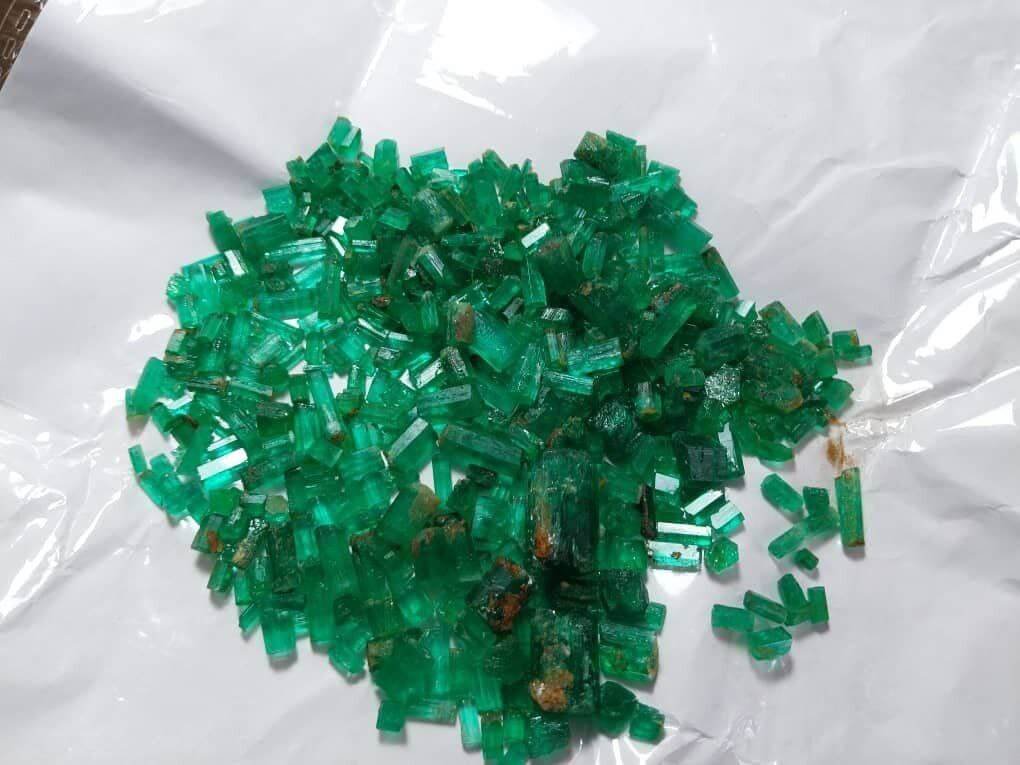 The Ministry of Mines and Petroleum has reported that during the current year, 12 emerald sales auctions from Panjshir were held, resulting in the sale of 36,400 carats of emeralds worth $2.6 million USD.
Homayoun Afghan, spokesperson for the Ministry of Mines and Petroleum, said: “The sales process is entirely transparent. The extracted emeralds are announced by the ministry on a designated day before the sale, and all traders from various provinces participate in the bidding.”
The ministry also added that currently, most foreign investors, particularly Russian traders, are showing interest in investing in Afghanistan’s mining sector, and the ministry is hopeful of achieving positive results in the oil and gas sectors as well.
Meanwhile, economic experts stress the need to process mineral resources, especially precious stones, within the country, considering it a crucial step toward job creation and increasing added value.
Jehesh Arab, an economic analyst, said: “Stones must be processed. If they are not exported in raw form, it will have a significantly positive impact on the country’s economy. The current issue is that foreigners are buying unprocessed precious stones and reaping all the profit.”
AbdulZuhoor Modabber, another economic expert, also said: “Afghanistan is among the countries rich in mineral resources, and with proper planning and scientific mechanisms, we can work to extract and process the minerals domestically.”
The ministry also announced that new emerald zones have been identified in Panjshir province, and in accordance with mining regulations and procedures, extraction licenses will be issued to local residents in those areas.
 A two-day exhibition showcasing women’s products and creations has been launched in Kabul by the Women’s Chamber of Industry and Commerce.
At this event, businesswomen presented their goods in nearly 70 stalls, including food products, traditional Afghan clothing, paintings, and jewelry.
Stall owners expressed satisfaction with the exhibition.
One stallholder, Hanifa, said: “The exhibition is very good for us because people see and become familiar with our products.”
Another participant, Mari Amini, said: “These exhibitions are held every two or three months. We prepare during that time, but our products often spoil — so we need permanent markets.”
Other women pointed out ongoing challenges such as the lack of dedicated markets for women, shortage of raw materials, and difficulties in obtaining business licenses.
Stallholder Haba stated: “It’s not easy for women to get licenses. To obtain one, we have to go to district offices, the Ministry of Information and Culture, or private institutions, which is very difficult.”
Officials from the Women’s Chamber of Commerce and Industry said the goal of the exhibition is to support businesswomen, create marketing opportunities, and promote their products.
Fariba Noori, Executive Director of the Chamber, said: “This exhibition was organized to unify women and their products so that people — whether locals or foreigners — can become familiar with Afghan-made goods.”
The event comes at a time when many women entrepreneurs are facing economic hardships and reduced job opportunities. Programs like this are seen as a way to help sustain and grow their businesses.
 A Production factory named Taj-e-Watan, which started operating two years ago in Aino Mina, Kandahar, now has the capacity to produce up to 200 tons per day.
Factory officials say that starting in 2026, for the first time, they will produce powdered milk for children not only for the domestic market but also for export to Tajikistan, Turkmenistan, and Uzbekistan.
Factory official Shahid Ahmad Popal said: “These milk products for children will not only be for Afghanistan, but we will also begin exporting them to neighboring countries.”
Factory workers say the high quality of products has increased market demand.
Worker Mohibullah said: “Mashallah, production is going very well. We have good, local products. They have a good sales market, and our production is also going well.”
Another factory worker, Fazel Ahmad, said: “Our company’s products are very good. Here we produce milk, yogurt, energy drinks, and filtered water.”
Officials from the Kandahar Chamber of Commerce and Investment say domestic investments in the dairy and beverage sectors have largely met the country’s needs.
President of the Kandahar Chamber of Commerce and Investment, Abdul Ahad Siddiqi, said: “It is truly a good and standard factory. They produce both milk and juices. At the national level, such factories exist that can meet our country’s needs.”
Currently, more than 200 production factories are active in Kandahar, with products being supplied not only to domestic markets but also exported abroad.

At a United Nations Security Council meeting on Afghanistan, in addition to security and political issues, the country’s economic situation and humanitarian needs were also discussed.
Tom Fletcher, Deputy Special Representative of the UN Secretary‑General for Humanitarian Affairs, identified Afghanistan as the third most in need of humanitarian assistance after Sudan and Yemen, and announced that nearly 22 million people will require immediate aid next year.
Expressing concern over budget cuts, restrictions on women’s work, the return of migrants, climate change, and recent earthquakes, he described these as factors complicating the humanitarian situation.
Mr. Fletcher also said: “Our ask is 1.7 billion U.S. dollars to target 17.5 million people. But in response to the funding reality, we have further hyper-prioritized our plan to target 3.9 million people in most urgent need of life-saving help.”
Representatives of China and India also emphasized support for the people of Afghanistan and the importance of the country’s economic development.
Fu Cong, China’s Permanent Representative to the United Nations, said: “Relevant countries should immediately and unconditionally release Afghanistan’s frozen assets, return them to the central bank, and end illegal sanctions.”
Harish Parvathaneni, India’s Permanent Representative to the United Nations, added: “We will continue our engagements with all stakeholders to augment our contribution to Afghanistan’s comprehensive development, humanitarian assistance, and capacity-building initiatives, in keeping with the priorities and aspirations of Afghan society. I thank you, Madam President.”
Meanwhile, Afghanistan’s Ministry of Economy welcomed the support of some countries in economic areas and called for continued assistance from the international community to strengthen the country’s economy.
Abdul Latif Nazari, Deputy Minister of Economy, said: “We welcome the positions of countries, and committed to carrying out fundamental work on job‑creating and infrastructure projects. We want the international community’s cooperation with Afghanistan, especially in the economic domain to continue.”
Other representatives, including from Russia, also stressed the need for special attention to Afghanistan’s social and economic situation and the expansion of cooperation in political, regional security, trade, and economic areas.
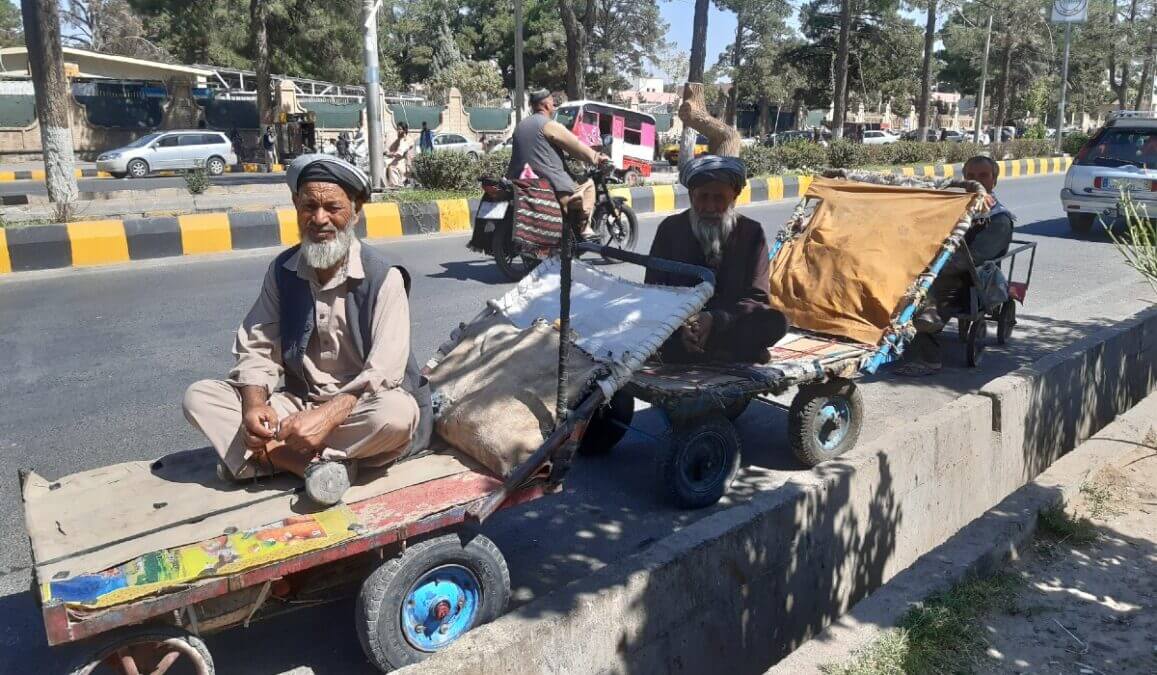 Afghanistan’s economy is set to record a second consecutive year of growth, supported by low inflation and stronger domestic revenues, but deep structural challenges continue to weigh heavily on the country’s long-term outlook.
According to the World Bank’s latest Afghanistan Development Update, cited by Himalaya Diary, gross domestic product is projected to expand by 4.3 percent in 2025, following an estimated 2.5 percent growth in 2024.
The recent uptick has been driven in part by increased demand linked to the return of more than two million Afghans from Iran and Pakistan, boosting activity in the services and industrial sectors.
Agriculture has shown relative resilience, with a record irrigated wheat harvest achieved despite severe drought conditions. Mining and construction have also contributed to overall output growth, helping sustain economic momentum.
However, the recovery has not translated into improved living standards. Rapid population growth, estimated at 8.6 percent in 2025, is expected to push GDP per capita down by around 4 percent. Inflation remains low at about 2 percent — among the lowest in the region — reflecting stable food prices and a stronger currency, but also highlighting Afghanistan’s reliance on imports and exposure to external shocks.
On the fiscal front, domestic revenues have improved, with tax collection projected to reach 17.1 percent of GDP in 2025 as enforcement measures tighten. At the same time, declining foreign grants are shrinking the overall fiscal space, increasing reliance on trade taxes and continued donor support.
The financial sector remains under strain. Banks face regulatory uncertainty, rising non-performing loans and weak credit growth, while liquidity pressures persist as more cash circulates outside the formal system. Limited access to banking services and the transition to Islamic finance have further constrained financial inclusion.
Labour market pressures are also mounting. Nearly one in four young Afghans is unemployed, and restrictions on women’s education and economic participation are undermining human capital and long-term growth prospects. These challenges are compounded by one of the largest return migration waves in recent years, with an estimated 4 to 4.7 million people returning between late 2023 and mid-2025, intensifying pressure on jobs and public services, particularly in urban and border areas.
The World Bank warns that sustaining the recovery will require reforms to attract private investment, strengthen the financial system and diversify exports. Improved governance, a more supportive business environment and stronger engagement with international partners will be critical if Afghanistan is to reduce its reliance on humanitarian aid and move toward more resilient and inclusive growth.
 The Office of the Governor of Herat announced on Tuesday that for the first time, a shipment of ten containers of batteries, of various sizes, manufactured at the local industrial park, has been exported to Saudi Arabia and the United Arab Emirates.
According to a statement, the batteries were dispatched in the presence of the Deputy Minister of Industry and Trade, local officials, and industrialists.
The Deputy Minister of Industry and Trade stated that over the past four years, significant progress has been made in the industrial sector.
The Herat local administration welcomed this initiative, describing the export of domestic products as an important step in strengthening the local and national economy. It assured that providing full support to industrialists, offering necessary facilities, and creating a suitable environment for the development of production and exports remain top priorities for the administration.
 Stephen Rodriguez, the United Nations Development Programme (UNDP) representative in Afghanistan, told that despite four decades of war and crisis, the country’s overall situation is improving though serious economic, climate, and social challenges still remain.
He stated that UNDP is currently focused on three core areas: infrastructure development, economic growth and job creation, and combating climate change.
According to Rodriguez, nearly 2 million people have benefited from UNDP’s health and education services in recent years, while more than 10 million have benefited from its infrastructure investments.
Rodriguez said: “There is no doubt the situation is improving, and that is a positive sign. Forty years of war and insecurity created severe challenges for citizens and global organizations across most of the country, affecting both trade and business operations. Still, we are seeing progress infrastructure is being built, the economy is stabilizing, government revenues are increasing, and corruption is declining.”
He added that in the economic sector, UNDP has supported over 80,000 small and medium-sized businesses, leading to the creation of more than 400,000 jobs.
However, he stressed that the current economic growth rate of around 1.9% is insufficient to combat poverty and unemployment. Afghanistan needs 6–7% growth to meet the population’s needs.
Rodriguez explained: “Millions of Afghans are returning, nearly $1 billion in humanitarian aid is being reduced, and natural disasters like floods are placing enormous pressure on the economy. To reduce poverty and generate employment for millions, Afghanistan’s economy must grow much faster.”
He also highlighted that restrictions on women’s participation are a major drag on economic potential. According to UNDP projections, Afghanistan could suffer nearly $1 billion in economic losses between 2024 and 2026 due to limitations on women’s involvement.
Rodriguez noted that nearly 78,000 women entrepreneurs have received support so far, but this figure is insufficient for the country’s population and must increase significantly.
He added: “There are real restrictions. This year, we conducted a study and listened to voices from across the country entrepreneurs and investors alike. Thousands have shared their concerns with us. Restrictions on mobility and the requirement for male guardians during travel increase business costs for women. Some male traders also refuse to engage with female entrepreneurs.”
Rodriguez also issued a warning about the climate crisis, citing water shortages and the risk of Kabul drying up by 2030 as a looming emergency.
In conclusion, he noted that while UNDP has a $150 million budget for 2025, it requires at least $300 million to sustain its programs. With humanitarian aid decreasing, securing funding remains one of the biggest challenges.
 A three-day exhibition showcasing domestic products has been launched in Sheberghan, the capital of Jawzjan province. The event is organized by a private company in cooperation with the Ministry of Industry and Commerce.
According to organizers, 60 booths have been set up to display a range of locally produced goods and products.
Masoud Haqmal, the event organizer, said: “This exhibition in Sheberghan is being held for three days, featuring booths from local iron smelting factories, food production companies, and carpet weaving workshops.”
Local officials in Jawzjan say the purpose of the exhibition is to promote domestic products and encourage investors to focus on opportunities inside the country rather than abroad. They also emphasized that the current environment is suitable for investment.
Jawzjan Governor Gul Haidar Shafaq said: “Whatever support is needed, we will provide it. We must support one another and advance Afghanistan’s economy together.”
Niaz Mohammad Tawab, Director of Industry and Commerce in Balkh, said: “The facilities provided to industrialists in Jawzjan may not be available in other provinces.”
Exhibitors welcomed the initiative, saying such events offer strong marketing opportunities for domestic products.
Najibullah, a local industrialist, said: “Organizing such exhibitions both inside and outside the country helps promote domestic products and boost the national economy.”
This is the first exhibition of the year in Jawzjan province. Officials say another exhibition focusing on domestic products and women’s handicrafts will be launched in the coming days.