
April 2026
Facebook-f
Twitter
Youtube
Linkedin-in
Instagram
Afghanistan Economic Outlook, is a creative initiative of the Afghanistan Economic and Legal Studies Organization (AELSO) which reflects most important & the latest economic events that happened during a month in Afghanistan.
By reading this economic newsletter, that has designed in three languages (Pashto, Dari & English), you can get a wider overview of Afghanistan’s economic situation.
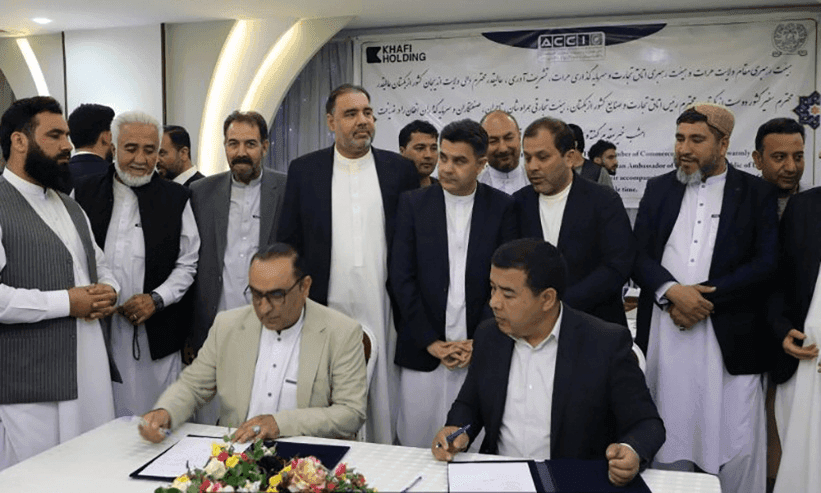 Herat has taken a major step forward as a regional trade powerhouse, with 14 commercial agreements worth over $524 million signed during a high-level business conference linking Afghanistan and Uzbekistan.
The conference, held on Tuesday in Herat, brought together senior government officials and influential business leaders from Herat and Andijan, creating a dynamic platform to deepen economic cooperation, unlock new investment opportunities, and strengthen cross-border partnerships.
Speaking at the event, Fayez Ahmad Khwafi, Deputy for Provincial Affairs at the Afghanistan Chamber of Commerce and Investment, highlighted the growing importance of economic ties between the two nations. He pointed to Herat’s strategic position as a gateway for trade, emphasizing the critical role of the Islam Qala and Torghundi ports in driving regional commerce.
Khwafi stressed that continued exchange between business delegations is essential to sustaining momentum, describing the collaboration between Herat and Andijan as a significant move toward expanding bilateral trade and fostering long-term economic growth.
Adding further weight to the initiative, the Governor of Herat welcomed the agreements and confirmed plans for an upcoming delegation visit to Andijan—signaling a commitment to building even stronger relationships with Uzbek investors and traders.
The event drew wide participation from key stakeholders, including the governors of both regions, heads of national chambers of commerce, and a large contingent of private sector representatives.
Officials say the agreements span multiple industries and are expected to deliver a meaningful boost to trade between Kabul and Tashkent, reinforcing a shared vision for stronger regional economic integration.
Afghanistan’s fragile economy is grappling with a series of shocks that intensified in 2025, according to a World Bank economic update report released on Wednesday.
The report noted that Afghanistan has been hit by reduced foreign aid, prolonged crossing closures along the disputed Durand Line with Pakistan, natural disasters, and a significant return of refugees from Iran and Pakistan.
These pressures have driven an estimated 11 percent population increase in the fiscal year 2025, largely due to returning migrants, the World Bank stated.
While Afghanistan’s aggregate GDP grew by around 4.8 percent last year, reflecting a rebound in nonagricultural activity and private consumption, the growth has not kept pace with population expansion. As such, per capita GDP contracted by 5.6 percent, as rising inflation and higher trade and transport costs eroded living standards.
“The influx of returnees has temporarily boosted domestic demand, but also places additional strain on labor markets, housing, and social services,” the report noted.
Looking ahead, Afghanistan’s economy is projected to grow by 4.0 percent in 2026, driven by strengthening domestic demand, higher private investment, and improved absorption of returnees into the workforce. However, the report warns that ongoing conflict in the Middle East and disruptions to trade routes, particularly the 60 percent of Afghan trade that passes through Iran, pose significant risks.
“Border closures or sudden surges in returnees could further depress per capita incomes and fuel inflation,” the World Bank said. Trade rerouting may mitigate some effects, but the country remains vulnerable to regional instability.
Despite these challenges, analysts highlight that modest growth and ongoing private-sector activity offer some hope for recovery. The World Bank emphasizes that sustained economic resilience will depend on peace, stable trade corridors, and the ability to productively integrate returning populations into the labor market.
Afghanistan’s experience underscores the broader regional pressures in the Middle East, North Africa, Afghanistan, and Pakistan (MENAAP), where conflict and humanitarian crises continue to ripple through economies, affecting inflation, trade, and social stability.
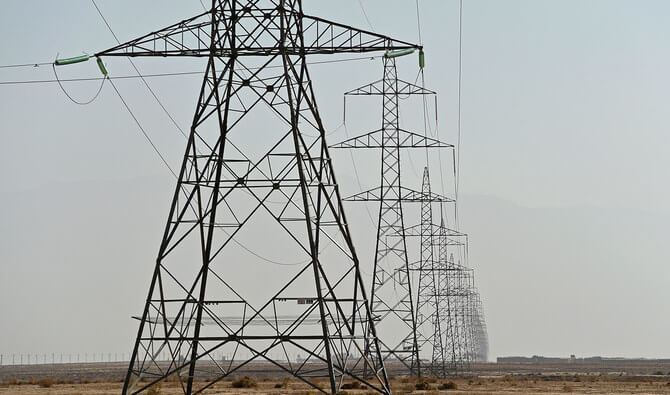 Taliban said Tuesday that work has begun on three electricity transmission and distribution projects in northern Afghanistan’s Faryab province, valued at 1.12 billion afghanis (about $18 million).
In a statement, the office of the Taliban deputy chief minister for economic affairs said the projects include construction of a 110-kilovolt transmission line from a central substation in Faryab to the districts of Pashtun Kot, Belcheragh and Gurziwan.
The plan also includes building a 110/20-kilovolt substation in Belcheragh District and expanding distribution networks using transformers with a capacity of 18 megavolt-amperes in Belcheragh and 5 megavolt-amperes in Pashtun Kot district.
The statement said the projects will be funded by the Taliban administration’s budget and carried out by private sector contractors, with completion expected within three years.
It added that the projects are intended to reduce electricity shortages in the targeted areas and improve access to power services for residents.
Afghanistan relies heavily on imported electricity from neighboring countries to meet most of its domestic demand.
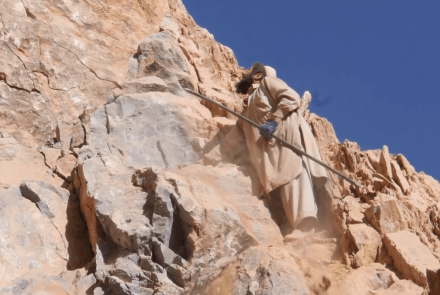 Kazakhstan is actively exploring mining opportunities in Afghanistan and Rwanda, focusing on rare metals, as part of a broader strategy to expand its resource development portfolio. According to a report by Kazinform, Tau-Ken Samruk, Kazakhstan’s national mining company, is conducting laboratory studies on mineral samples obtained from both countries.
The announcement was made by Iran Sharkhan, Kazakhstan’s Vice Minister of Industry and Construction, during the Geoscience & Exploration Central Asia 2026 event. Sharkhan emphasized the substantial resource potential in Afghanistan and Rwanda, noting that current efforts are directed towards evaluating the legal and regulatory frameworks in these countries, as well as verifying the geological prospects before proceeding with potential mining operations.
The laboratory testing, which is taking place at Tau-Ken Samruk’s facilities and additional labs in Kazakhstan’s Karaganda region, involves comprehensive analysis of base metals, rare metals, and rare earth elements from the two countries. These tests will determine the viability of large-scale mining operations in the future.
Sharkhan further indicated that if the laboratory results confirm promising geological findings, more detailed plans for mining projects will be disclosed in the coming months.
The report also highlighted that Kazakhstan’s major mining companies have already invested nearly 150 billion tenge into scientific research in the country’s mining sector, reinforcing the nation’s commitment to advancing its mining industry on both the local and international stages.
As Kazakhstan looks to expand its global mining footprint, the exploration of rare metals in Afghanistan and Rwanda marks a significant step towards diversifying its mining interests.
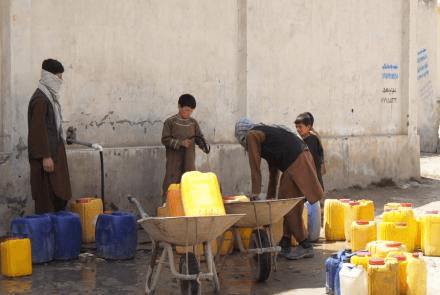 A number of residents in Kabul’s District 17 complain about a shortage of drinking water, saying the challenge has created serious difficulties in their daily lives.
According to them, they cannot afford to pay for water, and the continuation of this situation has increased their economic pressure.
Residents of this district are calling on authorities to take immediate action to provide drinking water and address the problem.
Abdul Ghafar, a resident of District 17, said: “Compared to the past, fewer people come to collect water today, but there are still days when people line up, sometimes in order and sometimes not, to fill their barrels. On some days, the number reaches around 100 to 150 barrels per day. Many people wait until late at night and then return home with full barrels, and sometimes even without water.”
Ahmad, another resident of District 17, told TOLOnews: “We are facing a serious water shortage. As you can see, even at this age, we are forced to come and collect water and carry heavy barrels home with great difficulty.”
On the other hand, some private water supply companies that sell drinking water say they are trying to provide water to customers based on demand in this area.
Abdul Fattah, a water vendor, said: “We supply as much water as customers need. However, during the hot seasons when demand increases, the work becomes difficult for us. For example, under normal conditions, we deliver a water tanker for 200 to 300 afghanis, but at that time, the price rises to 600 or 700 afghanis. Our vehicles also face many problems while transporting water.”
District 17 is not the only area in Kabul facing water shortages. Previously, residents in various parts of the city have repeatedly complained about the lack of drinking water. It remains to be seen when this challenge will be resolved.
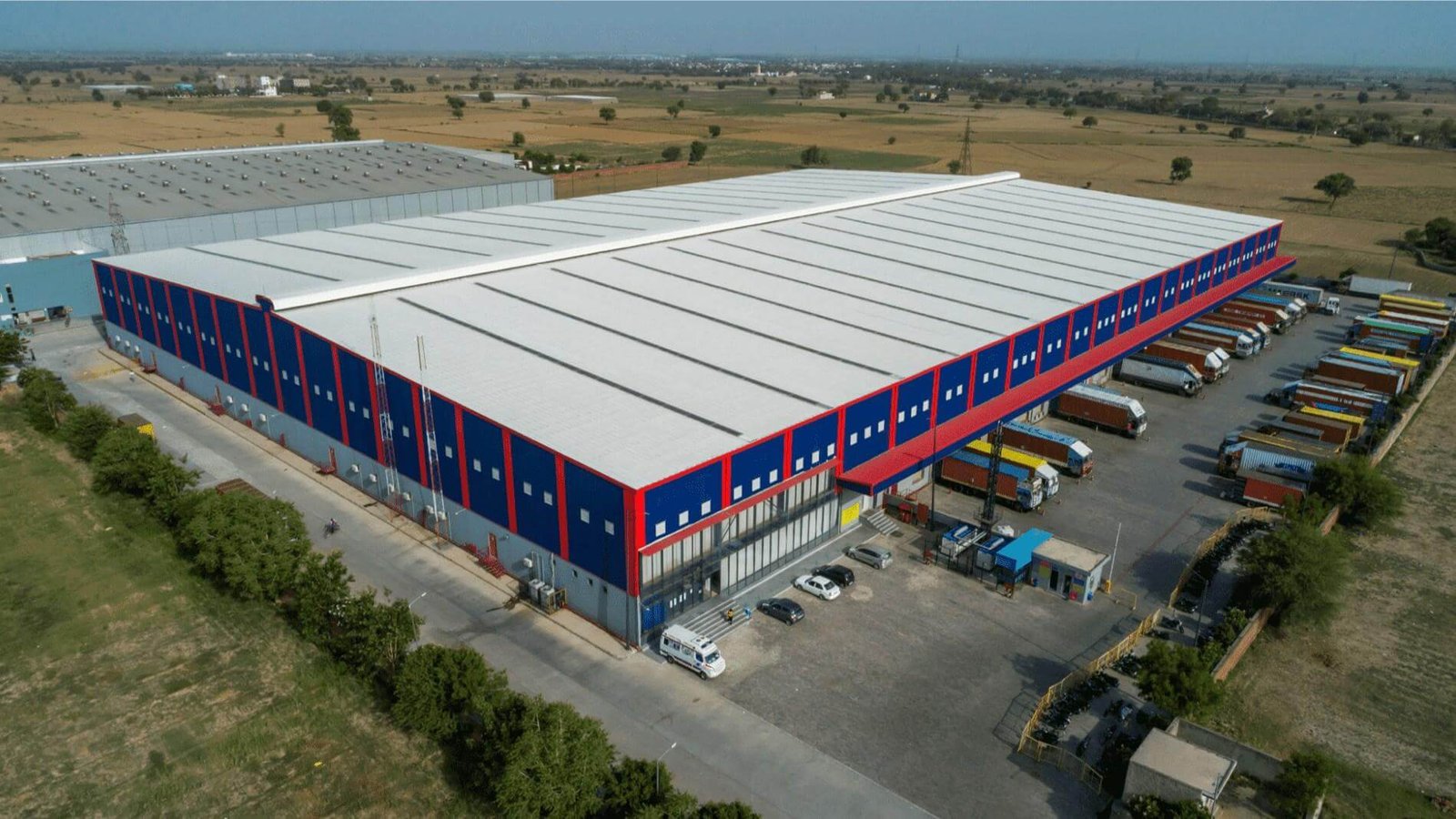 Nooruddin Azizi, the Minister of Industry and Commerce of Afghanistan, attended the opening ceremony of Uzbekistan’s International Industrial Exhibition during his visit to the country.
According to the Ministry of Industry and Commerce, the exhibition was held in Tashkent for three days, with more than 60 Afghan companies participating in sectors such as cotton, coal, pharmaceuticals, and agricultural products.
Economic analyst Mir Shakib Mir said that participation in economic, trade, industrial, or agricultural exhibitions is beneficial for strengthening Afghanistan’s economy and trade, and helps create opportunities for Afghan products as well as contracts between Afghan and foreign traders.
On the sidelines of the exhibition, Azizi also met with Andrei Kuznetsov, the Minister of Industry of Belarus.
The two sides discussed increasing trade between the two countries and the potential purchase of oil from Belarus.
Akhundzada Abdul Salam Jawad, spokesperson for the ministry, added that the Afghan minister invited Belarusian investors to take advantage of investment opportunities in Afghanistan, particularly in the pharmaceutical sector.
Meanwhile, some economic experts consider strengthening ties with all Central Asian countries—especially Uzbekistan—important, emphasizing that such visits can help introduce domestic products, attract investment, and expand trade relations in the region.
Another economic analyst, Abdul Ghafar Nizami, noted that trade largely depends on imports and exports. He said Afghanistan imports heavily from Uzbekistan but exports less, stressing the need to boost exports, particularly raw materials, as Uzbekistan has many factories that can utilize them.
This comes as, following regional changes and the disruption of Afghanistan’s trade with Pakistan, Kabul is seeking new markets, particularly in Central Asia.
Previously, at a meeting in Kabul with Central Asian countries, a target was set to increase trade volume between Afghanistan and these countries to $10 billion over the next three to four years.
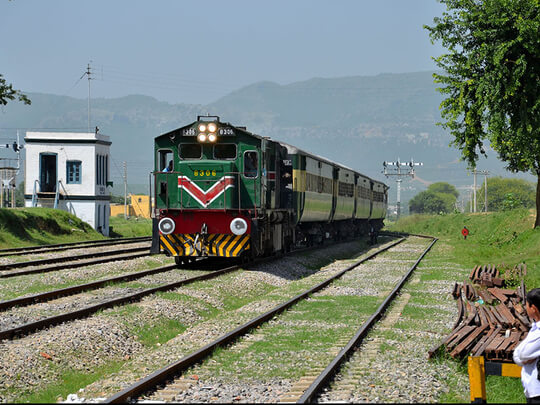 Kazakh media report that officials in the country are striving to increase the volume of trade with Afghanistan from the current level of around $500 million to $3 billion in the coming years.
According to the report, Kazakh authorities have also emphasized that the majority of this trade is currently based on Kazakhstan’s exports, including grain, flour, and agricultural products.
An excerpt from Kazakh media reports states: “Kazakhstan intends to raise its trade volume with Afghanistan to $3 billion in the coming years, while the current figure stands at approximately $500 million annually.”
Qutbuddin Yaqoubi, an economic analyst, said: “The capacities that Kazakhstan possesses, in cooperation with the Afghan government, can be considered a valuable opportunity for Afghanistan, particularly in the development of economic infrastructure.”
Meanwhile, the Ministry of Industry and Commerce says that the trade volume between Afghanistan and Kazakhstan reached $565 million in 2025.
Akhundzada Abdul Salam Jawad, spokesperson for the Ministry of Industry and Commerce, said: “The trade volume between Afghanistan and Kazakhstan reached $565 million in 2025. Of this amount, $55 million accounted for Afghanistan’s exports and $510 million for imports.”
Abdul Jabbar Safi, head of the Kabul Industrialists Association, told TOLOnews: “If we rely solely on imports and the level of imports exceeds our exports, it will not be beneficial for Afghanistan’s economy. Solutions must be identified to determine which Afghan products can enter markets without obstacles and help strengthen the country’s exports.”
Earlier, Amir Khan Muttaqi, Acting Minister of Foreign Affairs of Afghanistan, said at the Afghanistan–Central Asia Consultative Dialogue held in Kabul that over the past nearly five years, Afghanistan’s relations with Central Asian countries have seen notable progress in the economic, trade, and transit sectors, and that the ground is now prepared for further expansion of this cooperation.
Feb
Jan
Dec
Nov
Oct

Advancing the Ideas for a Peaceful and Prosperous Afghanistan
Facebook-f
Twitter
Youtube
Linkedin-in
Instagram
Read More about Afghanistan Economic Outlook
Read more about recourses
© 2026 Copyright Afghanistan Economic & Legal Studies Organization.